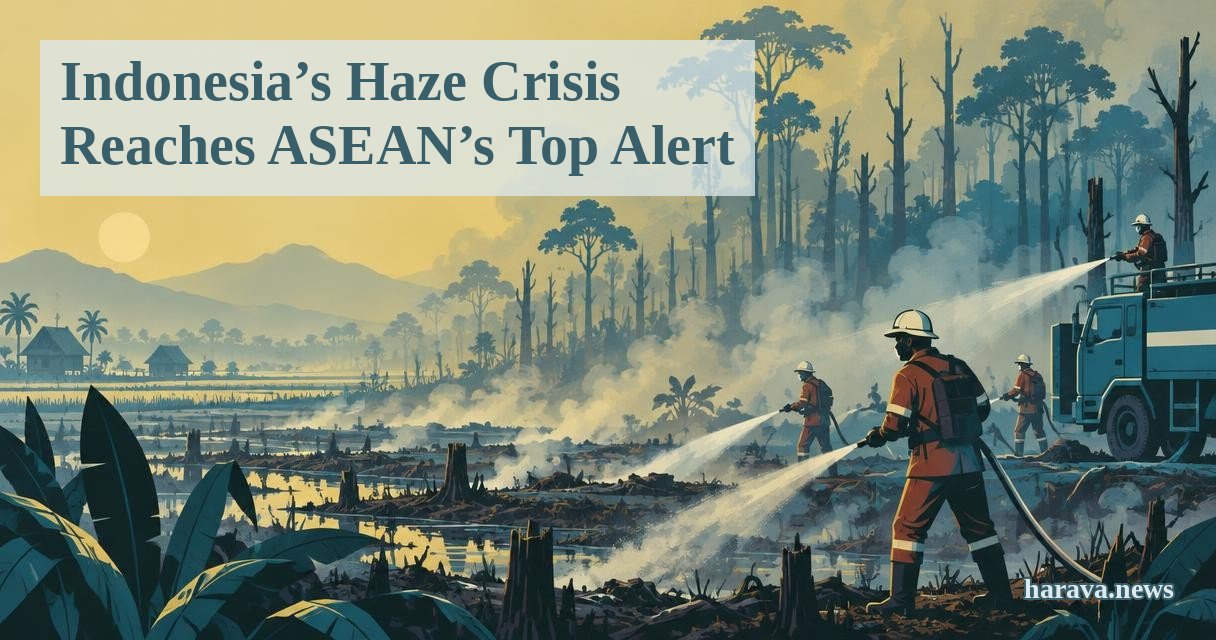
Indonesia’s acceptance of neighboring countries’ firefighting help is an urgent response to a crisis that exposes why Southeast Asia’s haze problem keeps returning.
Fires spread across millions of hectares
A satellite monitor estimated that fires burned 1,916,588 hectares in Indonesia between January and the end of September 2026. That estimate exceeds the burned area at the same point in 2019 by 38 percent.
ASEAN’s Specialized Meteorological Centre activated Level 3, its highest alert, for the Southern ASEAN region as smoke spread into neighboring countries. The centre reported unhealthy air in Singapore and Peninsular Malaysia, with unhealthy-to-hazardous air in parts of Borneo and Sumatra.
Why the fires keep starting
Indonesian authorities said human activity is the main source of the blazes, whether started deliberately or by accident. Burning remains a cheap, quick method to clear land for farming, and a strong El Niño left vast areas unusually dry.
Drained peatlands make the damage harder to control. When dry peat catches fire, it can smolder underground for weeks, meaning water dropped on visible flames does not easily put out the fire below the surface.
Enforcement and regional assistance
Indonesian police named 223 people and nine companies as suspects in fire cases, though enforcement has not yet prevented widespread burning. President Prabowo approved accepting foreign assistance, and Indonesia welcomed Malaysia’s offer of three helicopters and 52 personnel while Singapore’s aid was also coordinated.
The smoke has forced schools to close and restricted outdoor activities across the region. While weather forecasters say scattered rain could soon bring temporary relief to some areas, ASEAN foreign ministers plan to discuss the cross-border problem at a meeting in November.