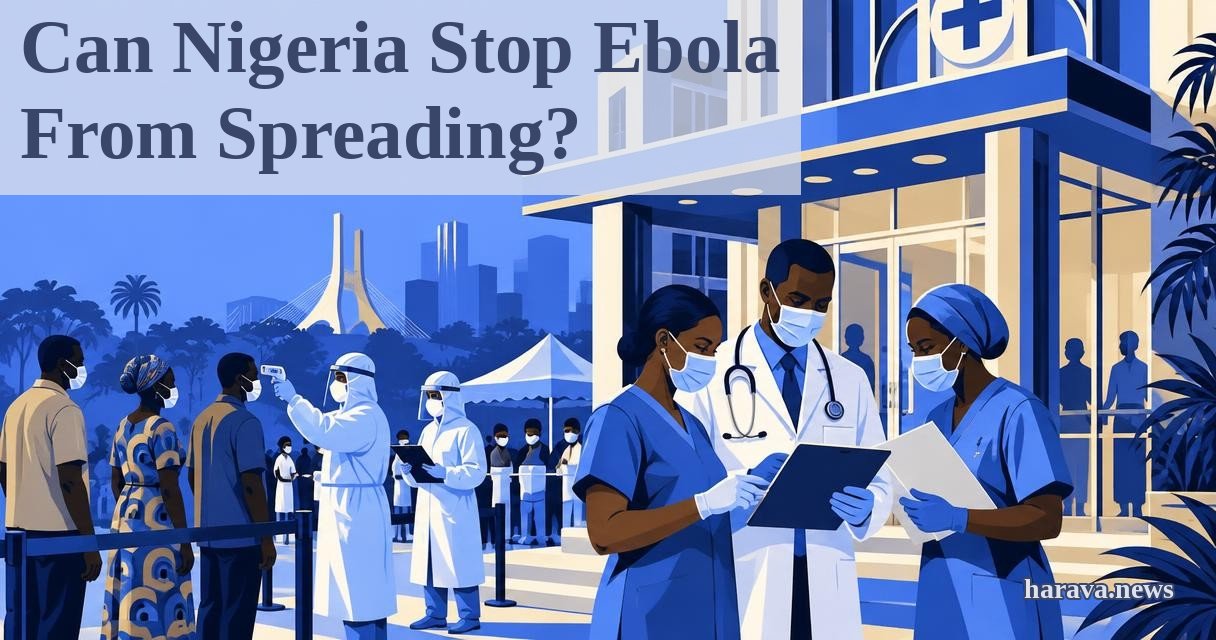
Nigeria’s first Ebola case in the current outbreak is an imported infection, and the response now depends on finding and monitoring everyone who may have been exposed.
The case and its contacts
The case was confirmed in Abuja on October 20 in a woman who had recently travelled from Uganda. The World Health Organization says she arrived in Nigeria on October 3, developed symptoms four days later, sought care at a private hospital on October 11 and tested positive on October 20. She was isolated.
At the time of the announcement, officials had identified 44 people who might have been exposed, including health workers, patients, caregivers and travel contacts. Teams are still identifying and monitoring people, so the number could change. Authorities had not reported another Nigerian case in their initial announcement.
The woman’s travel route does not show where she caught the virus. WHO says her source of infection and full exposure history remain under investigation. Uganda declared its earlier outbreak over in July.
The virus and how it spreads
The outbreak began in the Democratic Republic of the Congo in May and has since reached several countries. It is caused by the Bundibugyo type of Ebola. Nigeria’s disease-control agency had warned that there was no approved vaccine or specific treatment for this strain, and that vaccines and antibody treatments used against another Ebola type should not be relied upon. By October 18, the DRC had reported 9,552 confirmed cases and 4,602 deaths, according to data collated by the European Centre for Disease Prevention and Control.
Ebola spreads through direct contact with the blood or body fluids of someone who is sick, or with contaminated materials; it is not airborne. People can spread it after symptoms begin, not before. The incubation period can last up to 21 days, making early recognition, isolation and careful contact follow-up important. The patient’s several days of care before confirmation make the private hospital a focus for tracing and infection-control work.
Nigeria’s preparations and past response
In May, the Nigeria Centre for Disease Control assessed the risk of an imported case as high, citing international flights, population movement, borders and trade routes. It also warned that early Ebola symptoms can resemble malaria or Lassa fever, making recognition harder.
Nigeria’s 2014 experience offers a model, but no guarantee. An infected traveller from Liberia brought Ebola to Lagos. Nigeria recorded 19 confirmed cases and one probable case, with eight deaths. An incident-management centre coordinated the response, and teams identified and followed 894 contacts. According to the CDC, no new cases had occurred after August 31. The current case is in Abuja, the outbreak has spread across borders, and this strain lacks approved countermeasures available for some other Ebola types.
The regional response ahead
Nigeria’s population and travel links raise the stakes, but do not make widespread transmission certain. In Kenya, an imported case was followed by infections among relatives and health workers. Protecting clinic staff, sharing travel information between countries and finding contacts quickly can help prevent wider spread.
Africa CDC has scheduled a virtual meeting of health ministers for October 28 to coordinate cross-border action, support affected countries and strengthen preparedness. The agency says the meeting is also expected to inform preparations for a leaders’ summit. These are planned steps, not outcomes. Nigeria’s response will become clearer as contact tracing continues and officials learn whether further infections occur.