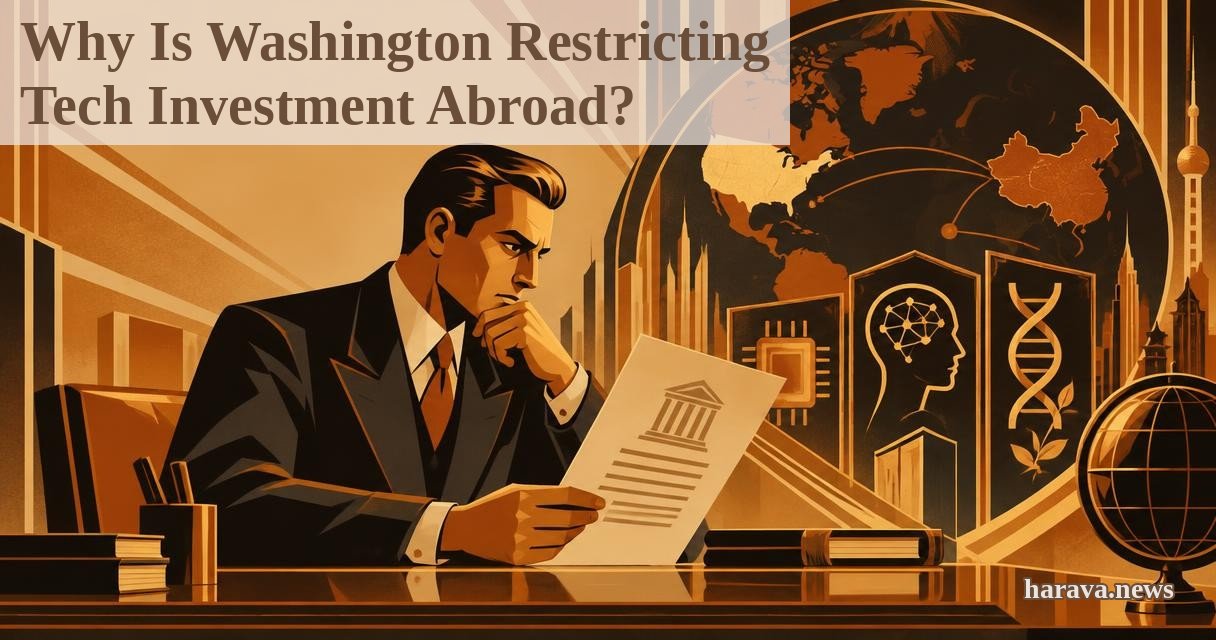
The Treasury Department has proposed rules that would restrict some U.S. investments in technology businesses in China and other countries it considers security risks.
How the rules developed
U.S. officials and lawmakers have long worried that investment can bring foreign companies expertise, business connections, suppliers and talent as well as money. President Joe Biden’s 2023 executive order started a program focused on China and semiconductors, quantum technologies and artificial intelligence. Treasury’s rules took effect in January 2025, and Congress broadened the approach through the COINS Act, passed in December 2025.
Treasury says the technologies can have both civilian and military uses, and U.S. investment could help countries of concern develop capabilities for military modernization, surveillance or intelligence. Treasury’s investment-security chief has also argued that investment can create networks and supply chains. The proposed rules therefore cover investment relationships as well as technology exports.
What the proposal would cover
The proposal has two tracks: some transactions would be prohibited, while others would be allowed only if reported to Treasury. The law names semiconductors and microelectronics, AI, quantum information technologies, high-performance computing and supercomputing, and hypersonic systems. Treasury proposes adding biotechnology. The rules would not automatically bar every investment in these fields; technical definitions and transaction types would determine which deals are covered.
The proposed countries are China, including Hong Kong and Macau, Cuba, Iran, North Korea and Russia. Congress included Venezuela under a provision tied to the Maduro government, but Treasury left it off the named list while saying some Venezuelan entities could still be covered. The rules would also place obligations on U.S. persons for certain transactions by companies they control abroad.
Covered deals can include some equity purchases, convertible or specially structured debt, joint ventures, new facilities or expansions, and investments through some limited-partner funds. The Associated Press reports that the proposal sets a $50,000 threshold and excludes many financial investments, including stock purchases. In biotechnology, the draft covers certain pharmaceutical compounds and activities involving biological design, sequencing, bioinformatics and automated scientific discovery. Ordinary drug-licensing arrangements are generally outside the definition, according to reporting on the proposal.
Why companies are watching
Investors and companies may need to examine what a foreign business develops, who owns or controls it, and how a deal is structured. Treasury says it imposed a $200,000 penalty in July 2026 after a U.S. company failed to report an investment by its controlled foreign subsidiary in a Chinese AI business. The case was under the existing program.
Treasury says some biotechnology tools and products could contribute to national-security capabilities. Drugmakers and industry groups say overseas discoveries and partnerships help them develop medicines, and warn that broad or unclear rules could limit access to research and create uncertainty. The licensing exception may protect familiar deals, but questions remain when licensing is paired with joint development or other investment ties.
What happens next
The proposal is not yet in effect. Comments are due December 7, 2026, after which Treasury can revise the definitions, exceptions and compliance requirements before issuing a final rule. The new framework’s effective date has not been set, and the existing program remains in force. Investors, technology companies and drug developers will be watching how clearly the final rules separate risky investments from cross-border business the United States wants to encourage.