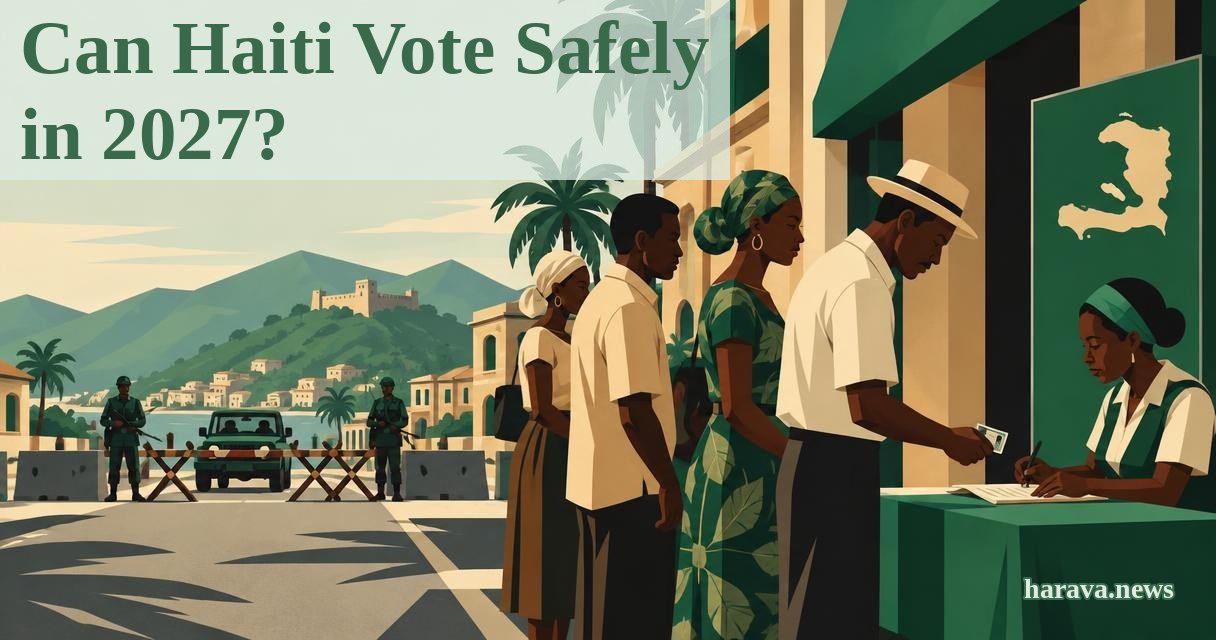
Haiti’s new election calendar sets the first round for July 18, 2027, but holding a meaningful vote will depend on whether the state can regain enough reach.
A long wait for elected leaders
The delay extends a political vacuum that began before the current security crisis reached its height. Haiti last held national elections in 2016. President Jovenel Moïse was assassinated in 2021, and no elected president replaced him; the last senators’ terms also expired years ago. A Transitional Presidential Council took power in 2024 after Prime Minister Ariel Henry resigned, with a mandate to help restore security and organize elections. When the council’s term ended on February 7, 2026, Prime Minister Alix Didier Fils-Aimé remained in charge without a president or parliament. The vote is a promised route back to elected national institutions.
The calendar has changed several times. The council first scheduled the 2026 first round for August 30, then moved it to December 13. In early October, it suspended the campaign period without setting a new date, citing technical and operational requirements. The UN secretary-general’s report said some political stakeholders questioned whether December voting was feasible under the security conditions and warned that voters and candidates would need a level playing field. On October 28, after amending the electoral decree and consulting security forces, political groups, civil society, businesses and the government, the council set the first round for July 18 and the second for October 4, 2027. It expects final results by October 23.
The work needed to hold a vote
Voter registration began in July, but the Electoral Council initially opened operations in nine departments, excluding the West Department because of local constraints. It said expansion would depend on acceptable security, access and effectiveness. The revised calendar sets May 20, 2027, as the end of voter registration and February 9 as the candidate registration deadline. Voters need safe, reachable registration sites; candidates need to travel and campaign; and ballot materials must reach polling places and return. Gangs can block roads and control communities, threatening each step.
In late October, AFP reported that nearly 1.5 million people had been displaced by violence, some gang-controlled municipalities lacked registration centers, and gangs frequently closed roads. The UN-backed Gang Suppression Force was intended to reach 5,500 personnel but had about 1,500 deployed, AFP reported. In an October report covering July to October, the UN secretary-general said gangs continued to challenge state authority. Security gains in parts of the capital remained fragile, and violence persisted in the West, Centre and Artibonite departments. Insecurity can affect who registers, who campaigns and whose votes are counted.
A timetable with uncertain prospects
The council’s announcement sets a timetable but does not show that conditions for an election have been met. It said the updated calendar was intended to let participants meet their obligations under the legal framework and reaffirmed its commitment to inclusive, credible and transparent elections. Whether the timetable is achievable depends on improved security and whether election operations can reach areas they could not safely reach before.
A national vote could give Haiti a more direct mandate for governing and help rebuild legitimacy after years without elected national leaders. But if insecurity keeps many people from registering or voting, the result could leave them feeling excluded and weaken the authority the election is meant to restore. Elections alone cannot disarm gangs or rebuild public services, but they can establish institutions with a public mandate to try.
The next tests are the registration and candidate deadlines and the council’s ability to make voting accessible across the country. The new schedule creates more time than the abandoned 2026 plan, but whether that time brings safer roads, reachable polling places and broader participation remains uncertain.