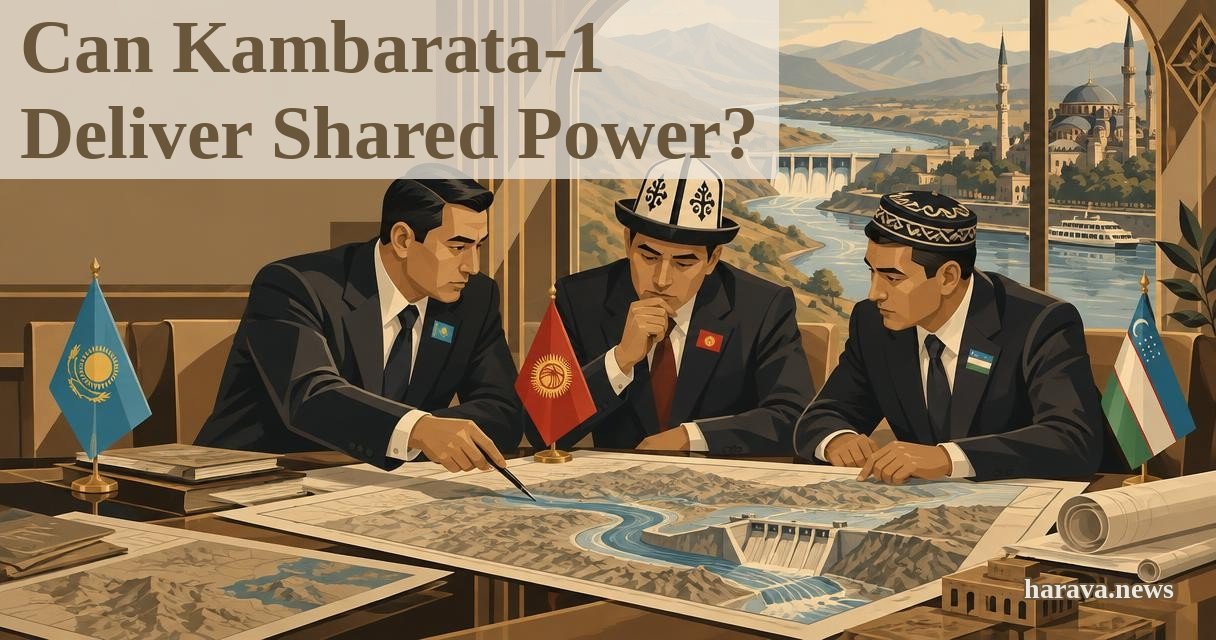
On October 30, Kazakhstan, Kyrgyzstan and Uzbekistan held World Bank-supported technical talks in Istanbul about Kambarata-1, a proposed dam whose success depends on agreements on funding, electricity and river management.
What the dam could change
The planned plant on Kyrgyzstan’s Naryn River would generate about 1,860 megawatts. The World Bank estimates annual output of roughly 6,000 gigawatt-hours, about half of Kyrgyzstan’s current electricity supply, and says the reservoir could help shift water releases between seasons. Winter power shortages can force costly imports, while downstream farms need water in summer. The Bank estimates Kyrgyzstan’s seasonal power shortfall at about one-fifth of annual domestic demand. These are projected benefits, not guaranteed results; they depend on how the dam is financed and operated.
Why the countries are negotiating
The project addresses a long-running regional challenge. Under Soviet-era arrangements, Kyrgyzstan stored river water and released more in summer for downstream irrigation, receiving energy supplies from fossil-fuel-rich countries below. After the Soviet Union broke up, that exchange weakened. Kyrgyzstan had more reason to release water in winter for electricity, while farmers in Uzbekistan and southern Kazakhstan needed it during the growing season. Kambarata-1 was pursued in the 1980s, but the Soviet collapse halted it; a later Russian-backed attempt also did not produce a completed project. A more cooperative climate and a 2023 roadmap helped revive the plan, leading to a joint-development agreement in June 2024.
Kyrgyzstan seeks more reliable electricity and the possibility of selling surplus power. Kazakhstan and Uzbekistan could gain from a larger regional power supply, but also rely on the Syr Darya system for irrigation. The World Bank describes a planned joint venture with Kyrgyzstan holding 34 percent and Kazakhstan and Uzbekistan 33 percent each, broadly matching expected financial contributions. That split does not settle who controls water releases, especially in a dry year, or how costs and shortages would be shared if output falls short.
Talks have not settled funding
Before the Istanbul meeting, the governments held three rounds of talks in 2026 on a draft intergovernmental agreement, in Bishkek, Tashkent and Almaty. In Almaty, representatives discussed management, financing and responsibilities. Officials said some provisions had advanced, while others still needed work. The October meeting’s public account described technical discussions and next steps, but announced no new treaty or financing deal.
In 2025, Uzbekistan’s energy minister put the construction estimate at $4.2 billion and reported a larger international financing portfolio. He also said design documentation was incomplete. Expressions of interest or a portfolio figure are not a final financing package with settled terms and binding commitments. The World Bank has supported feasibility studies, environmental and social assessments, and work on a sustainable financing and commercial framework. This work can assess whether the project is workable and bankable, but cannot decide how governments divide control, debt and benefits.
Local impacts and the next test
People near the site and downstream communities also have a stake. A large reservoir can permanently inundate land and change river flows, sediment movement, water quality and ecosystems. The World Bank has rated environmental risk as high, and draft documents include stakeholder engagement and livelihood restoration or resettlement plans. The extent of any displacement is not settled. Local impacts, compensation and monitoring need to be part of the design, and downstream communities will need credible assurances about water timing and availability.
The next test is whether the countries can turn the draft agreement and technical work into final rules for payments, joint-venture decisions and seasonal reservoir operations. The World Bank says a joint venture is intended to manage development and operations in a later phase. The October report announced no date for another negotiating round or a final agreement. Construction timing remains uncertain until studies, safeguards and financing are settled. Success will depend on whether the three countries and affected communities can trust how electricity, water and costs are shared.