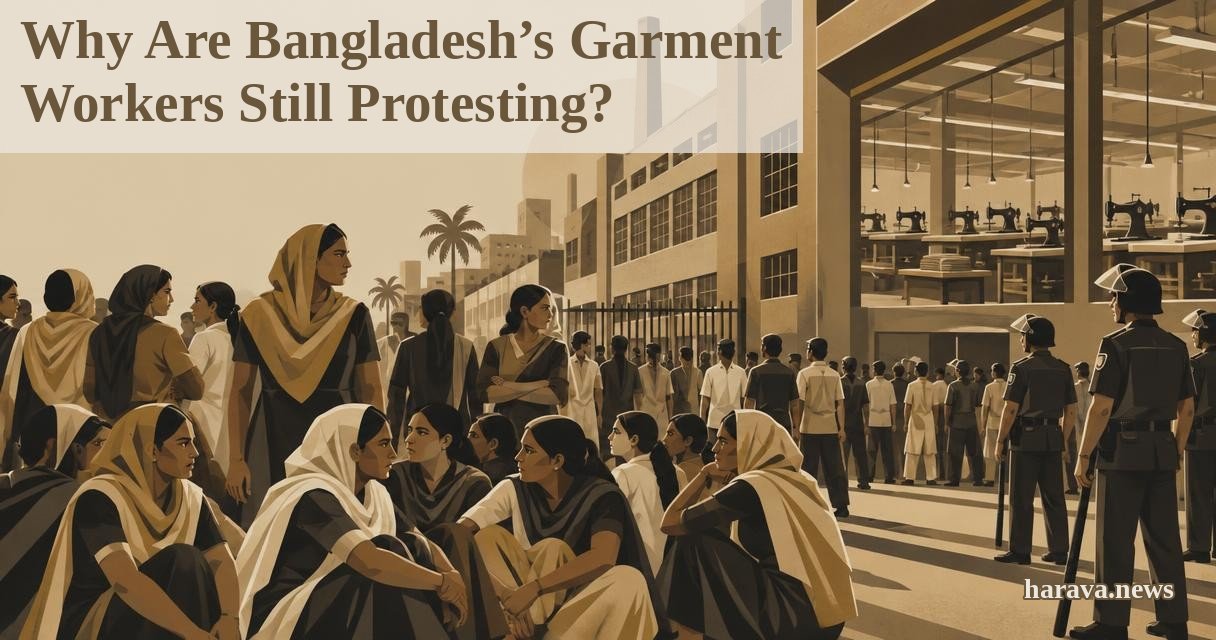
Bangladesh’s latest garment shutdown reflects workers’ claims that wages have not kept pace with living costs and a dispute over who should pay for higher wages.
Factories stop again
On Monday, November 2, factories that had reopened after earlier stoppages were disrupted again as workers clashed with police and blocked roads. Reuters reported that 679 factories halted production. Separate figures from garment manufacturers’ associations, reported by The Business Standard, put the number at at least 690, employing more than 1.7 million people. These figures count affected factories, not necessarily workers who took part in protests.
Workers want a monthly minimum wage of 30,000 taka, up from the current 12,500-taka floor. Some also want dismissed workers reinstated and blacklisting to end.
Why workers doubt a raise is coming
The minimum wage last rose in December 2023, from 8,000 to 12,500 taka, after protests. That was below the 20,000-to-25,000-taka minimum some worker groups sought, and some called the result inadequate. A 2026 amendment shortened the time between wage reviews from five years to three. But the board was formally created only on November 1, after demonstrations spread from Uttara to other industrial areas.
Bangladesh’s inflation was 8.34% year-on-year in September, according to figures cited by The Daily Star. Labour representatives told the paper that some workers earning 19,000 to 20,000 taka rely on 15 or 16-hour days, including overtime, and still struggle with rent, food, medicine and school costs. The current 12,500 taka is a gross minimum, while some protesters in earlier October demonstrations described their 30,000-taka demand as basic pay, so the figures are not directly comparable. Workers say ordinary hours and pay do not reliably cover household expenses.
Who can afford higher wages
Garments employ about four million people, generate more than 80% of Bangladesh’s export earnings and account for roughly a tenth of economic output. Owners say higher production costs, energy uncertainty and weaker demand in some markets limit what factories can absorb. Workers’ representatives argue international buyers should pay better prices so suppliers can raise wages.
Workers who depend on excessive overtime may keep facing the same problems. A sharp cost increase that factories cannot pass on could strain businesses and threaten orders. Reuters reported concerns that the shutdowns could delay shipments and affect buyer confidence during production for spring and summer orders.
What the wage board must do
The government’s six-member wage board includes employer and worker representatives, an independent member and a chair. It is to recommend a revised wage after considering workers’ costs and the industry’s capacity; the government will decide what follows. Its creation is not an agreement to the 30,000-taka demand. The Daily Star reported that no first-meeting date or announcement timetable was known.
Employers have urged workers to let the review proceed. The industry association president warned that continued protests could prompt a “no work, no pay” policy. The next test is whether the board can build enough trust to keep factories operating while negotiations continue.