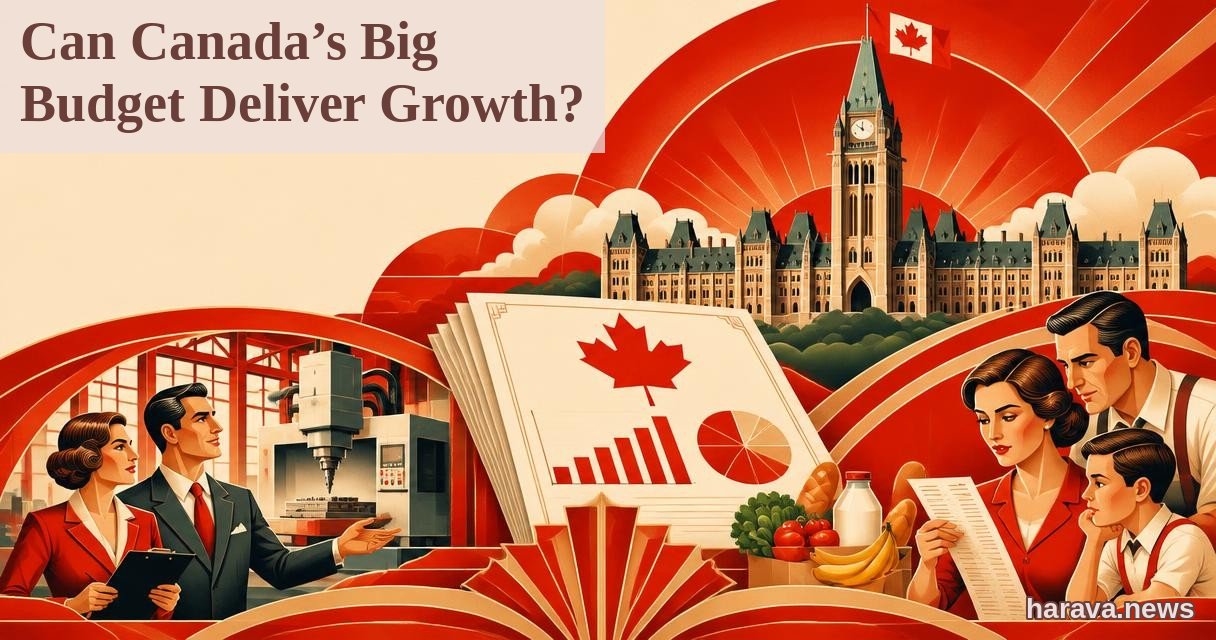
Mark Carney’s government is betting that business tax breaks, public investment and targeted relief can turn a $62.3-billion deficit into a more productive economy less dependent on the United States.
Why Ottawa is making the bet
The government says Canada has spent much of the past decade with weak productivity growth, lagging private investment and too much reliance on population growth and U.S. trade. American tariffs have exposed that dependence, especially in autos, steel and lumber. Ottawa wants to direct more money to Canadian projects, infrastructure and energy, and find new export markets. It presents this as both an economic strategy and a way to increase Canadian control over the economy.
What the deficit figures show
The budget forecasts a $62.3-billion deficit for 2026–27, about $3 billion less than the April estimate. The previous year’s projected deficit fell to $39.3 billion, helped by stronger-than-expected revenues, including revenue tied to higher oil prices. Ottawa says economic and fiscal developments improved its five-year outlook by $158.3 billion since spring. It proposes $142.1 billion in new spending and tax measures, while accounting for policies announced since April. Much of the improved outlook is being used to fund plans rather than quickly reduce borrowing.
Can tax breaks lift investment?
The Productivity Mega Deduction lets businesses write off eligible equipment and other assets sooner, instead of over several years. The government estimates it will cost $36 billion over five years and says it will make Canada more attractive for investment. The hoped-for gains are more machinery, technology and productive capacity. Whether businesses invest more than they otherwise would is key to whether the measure works.
What households will receive
The budget proposes a one-time Canada Groceries and Essentials Benefit supplement for early 2027, of up to $339 for a single person without children and $679 for a couple with two children. The payment can help eligible recipients, but it does not lower grocery or housing prices. Opposition leaders said the plan offers too little direct affordability help; the government argues lasting relief depends on investment and growth.
The costs and risks ahead
Growth or revenue could disappoint while borrowing costs rise. The budget projects public debt charges increasing from $60.2 billion in 2026–27 to $85.5 billion in 2030–31, leaving less room for other priorities. Ottawa says it will balance day-to-day operating spending with revenue by 2027–28 and keep the overall deficit-to-GDP ratio on a declining path. The total deficit is still projected to exceed $50 billion through 2030–31.
How the plan will be tested
The Parliamentary Budget Officer’s October outlook, published before Budget 2026 and excluding measures still to be announced, projected an operating balance in 2028–29 and a $67.8-billion deficit in 2030–31. It was not a direct forecast of the budget’s final plan, but the difference shows how much depends on Ottawa’s new measures and growth assumptions. The PBO said after the budget was tabled that it would analyze the plan.
Parliament will debate the legislation needed to implement the budget, and the Liberals’ majority puts them in a strong position to pass it. The longer test is whether the tax incentives bring additional investment and productivity, and whether that growth can support public services as interest costs rise.