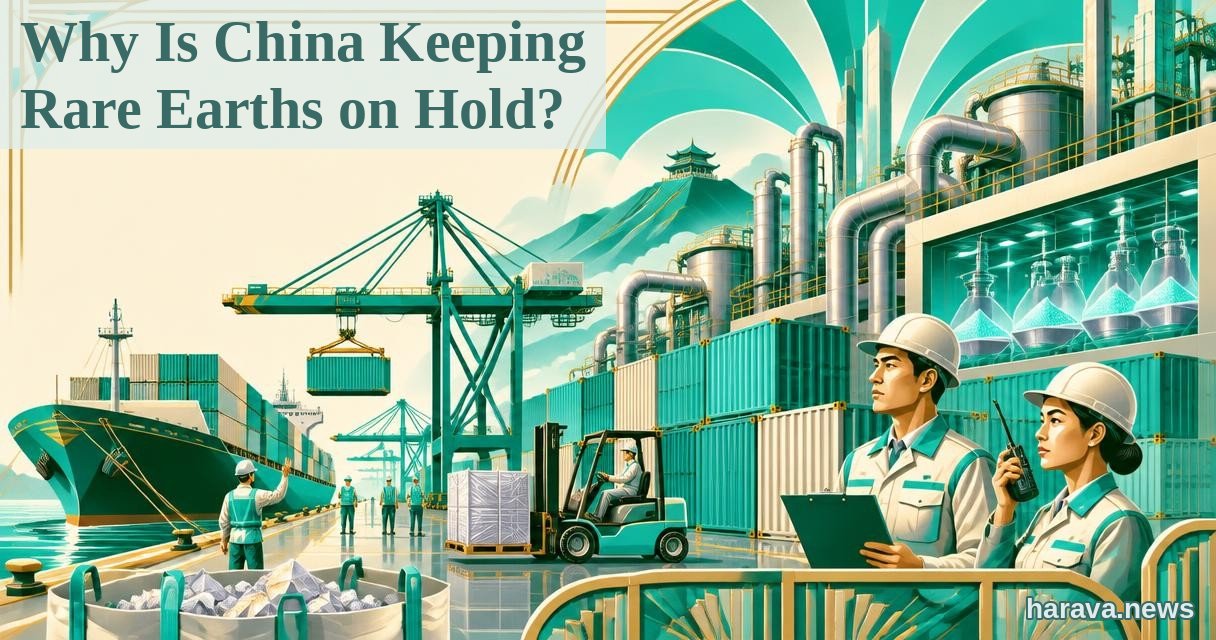
China’s Nov. 9, 2026, order extends the pause on a wider set of export controls until Jan. 10, 2027, but does not end restrictions on rare-earth trade.
What the pause covers
The order suspends six Chinese export-control notices from Nov. 11, 2026, through Jan. 10, 2027. They cover five additional rare earths—holmium, erbium, thulium, europium and ytterbium—as well as rare-earth equipment and technology, certain lithium-battery and graphite materials, and some products made abroad using Chinese-origin rare earths. The pause is not a general reopening of exports.
A separate licensing system remains in force for items involving seven other rare earths: samarium, gadolinium, terbium, dysprosium, lutetium, scandium and yttrium. China introduced these controls in April 2025. They are not a blanket ban, and Beijing says eligible applications can be approved, but the application process and uncertainty about timing can complicate supply planning.
Why supply matters
Rare earths are used in powerful permanent magnets for electric vehicles, wind turbines, industrial motors and defense systems. The International Energy Agency estimated that China accounted for about 60% of global mining output for magnet rare earths in 2024, around 91% of their separation and refining, and 94% of sintered permanent-magnet production. This concentration means licensing delays can matter even when material exists elsewhere.
The pause followed a year of trade escalation. China imposed its first rare-earth controls of 2025 in April, then announced a broader package in October covering more elements, equipment, technology and some foreign-made goods. Beijing cited national-security and nonproliferation aims, including the materials’ military uses. The measures followed U.S. tariffs and technology restrictions, and the October package was suspended after talks between President Donald Trump and President Xi Jinping in South Korea. The controls may also have given Beijing bargaining leverage, though that is an interpretation, not the stated legal rationale.
What happens next
Reuters reported that Beijing announced the Nov. 9 extension alongside a wider suspension of trade countermeasures and tariffs as the two governments pursue a longer-term agreement. The pause offers buyers short-term predictability, but April’s licensing requirements remain, and there are reports of higher prices for some rare-earth oxides. U.S. efforts to build domestic mining, processing, recycling and stockpiling aim to reduce exposure. CSIS argues that lasting resilience depends on sustained output, not just funding.
The next formal deadline is Jan. 10, 2027. China’s notice does not say what will happen then or set conditions for another extension. Trump is expected to meet Xi at the APEC leaders’ summit in Shenzhen later this month. Whether the controls are extended, resume or are revised will depend on negotiations. Companies can watch license decisions, shipments and new official notices.