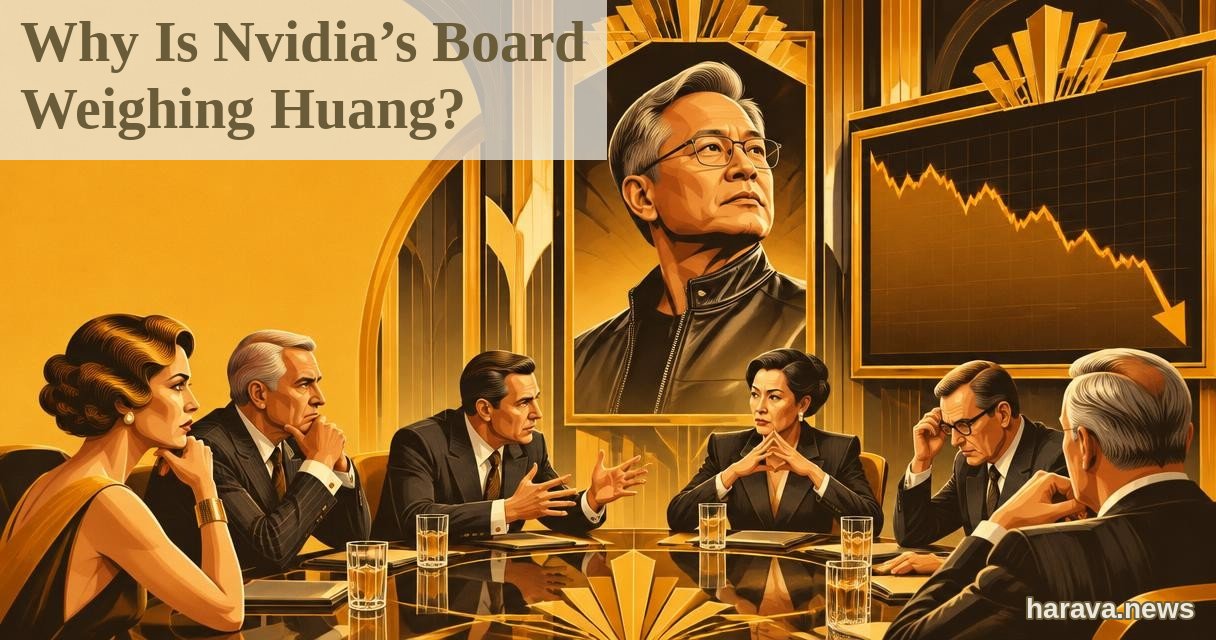
Nvidia’s board reportedly discussed CEO Jensen Huang’s future Wednesday as the company faced a security inquiry and questions about his conduct.
What started the inquiry
Reports linked Huang romantically to Alice Huang, a former executive at Singapore-based Megaspeed, which buys Nvidia’s advanced chips. U.S. intelligence reportedly suspected her of working for Chinese intelligence; China has rejected the allegation. Megaspeed’s business raised a corporate concern because U.S. rules restrict sales of the most advanced chips to China.
On Nov. 8, Huang told employees he had been unfaithful, without publicly naming anyone. Nvidia’s board announced an independent investigation, saying it had no reason to believe national security or company secrets were compromised. It also expressed confidence in Huang.
A second report raised questions
On Wednesday, The New York Times reported that Huang had also had a relationship with Kimberly Powell, Nvidia’s vice president of healthcare, who reported to him. The paper cited five people who had worked at the company; the allegation has not been established by a public investigation. If true, it raises questions about whether Huang crossed workplace boundaries with a direct report. The board’s independent members had hired outside counsel, but Nvidia has not said whether the investigation includes this allegation.
Why the board is weighing his future
The Wall Street Journal reported that the board was preparing to oust Huang. NBC News and Reuters separately reported that directors met Wednesday to discuss his future. The reports followed the board’s public confidence in Huang on Sunday. Nvidia’s bylaws allow a majority of its 11 directors to remove the CEO, and all but Huang are considered independent.
There is no public evidence that a business-performance problem prompted the discussion. The known triggers are the reported relationships, the security inquiry and the governance questions they raise. Nvidia shares fell more than 8% in after-hours trading, reflecting investor concern about the reported risk, not evidence of an earnings failure or the board’s stated reason.
What could change at Nvidia
Huang co-founded Nvidia and has led it since 1993. The company supplies chips central to the AI boom, and analysts have pointed to Huang’s role in product direction, customer relationships and investor confidence. There is no obvious named successor. His departure would not by itself stop Nvidia’s chips from shipping, but it could unsettle expectations about the company’s strategy and its place in the wider AI build-out. The board’s reported search for possible replacements makes succession part of the issue.
What happens next
As of Thursday, Nov. 12, no board decision had been publicly announced. The investigation is proceeding with outside counsel, and three House committee chairs have requested a closed-door briefing with Huang on Nov. 18 about his interactions with Alice Huang and Nvidia’s security safeguards. Nvidia’s quarterly results call is scheduled for Nov. 17, but neither date is a confirmed deadline for a board decision. It remains uncertain whether Huang will stay, whether the board will name an interim leader, and what the investigation will find.