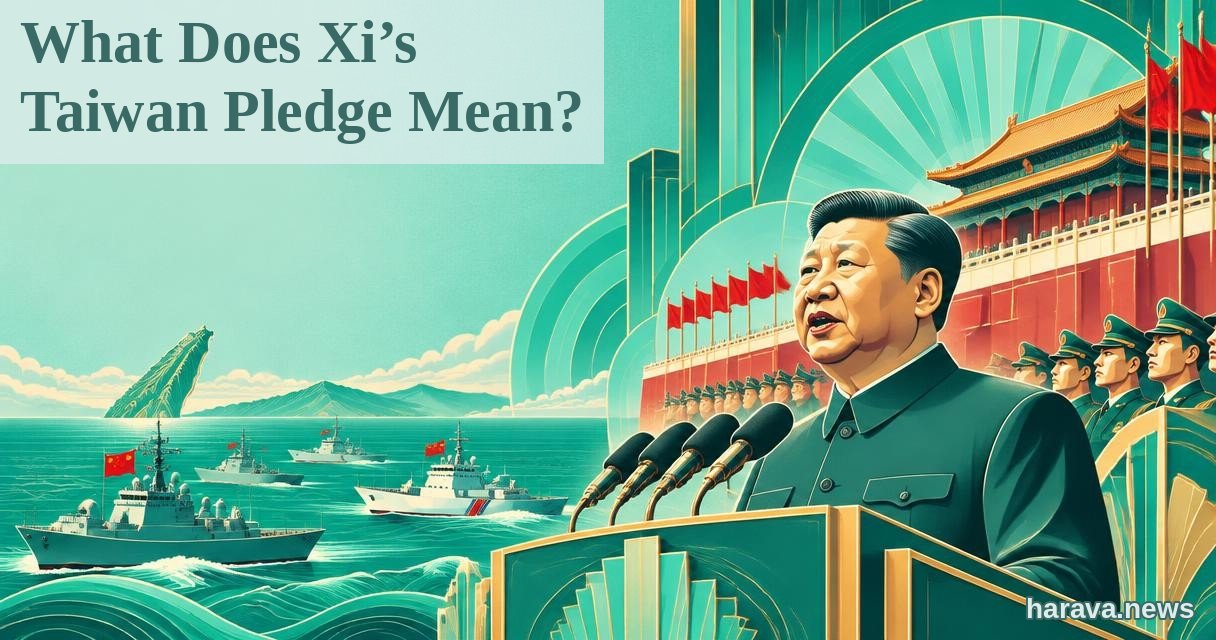
Xi called Taiwan’s “complete reunification” inevitable and offered talks, but Beijing’s sovereignty terms remain unacceptable to Taipei.
Why the history is disputed
At a ceremony in Beijing on November 12 marking the 160th anniversary of Sun Yat-sen’s birth, Xi called reunification a historic mission for China’s Communist Party. He said Beijing was willing to talk under its “one China” principle and did not mention using force.
After the Chinese Civil War, the defeated Republic of China government retreated to Taiwan in 1949 as the Communist Party founded the People’s Republic of China on the mainland. Taiwan has governed itself since, and the PRC has never controlled the island. Beijing calls the split unfinished business; many people in Taiwan see their democratic self-government as the reality to preserve. Beijing uses Sun Yat-sen, a revered figure on both sides, to present its claim as a shared national project. Taipei urged people to avoid China’s anniversary events and said Beijing distorts Sun’s legacy to promote unification.
A softer tone, on Beijing’s terms
At home, Xi links Taiwan to national rejuvenation, making unification a test of the Party’s resolve and leadership. Across the Strait, his pledge of peace and willingness to talk offer a conciliatory path, but only on Beijing’s terms.
Taiwan’s public has shown little support for Beijing’s proposed political arrangement. An August survey commissioned by Taiwan’s Mainland Affairs Council found that 81.2 percent opposed “one country, two systems,” while 83.9 percent said Taiwan’s future should be decided by its people.
In July, Xi left “peaceful reunification” out of a speech marking the Communist Party’s anniversary, while warning against Taiwan independence. Its return may signal an effort to emphasize persuasion and reduce alarm. But China’s 2005 Anti-Secession Law provides for “non-peaceful means” under conditions Beijing defines, including if it judges peaceful reunification no longer possible. The speech’s silence about force does not mean that option has been dropped.
The risks remain unresolved
For Taiwan, the stakes are political autonomy and the right of its people to choose their future. Washington and other regional partners are concerned that pressure could destabilize a vital shipping route and semiconductor hub. The day before Xi’s speech, G7 foreign ministers warned that China’s increased coast guard activity east of Taiwan threatened regional stability and freedom of navigation. They opposed changing the status quo by force or coercion.
The next test will be actions, not words. On November 6, analysts at the Institute for the Study of War and the American Enterprise Institute assessed that unusually broad Chinese naval and coast guard deployments might constitute an unannounced exercise simulating Taiwan’s isolation; they did not confirm an actual blockade. Further patrols, exercises rehearsing encirclement or new offers of dialogue may show whether Beijing is leaning more on pressure or persuasion. Xi’s speech points to no immediate settlement: the goal remains fixed, while the method and risks remain unresolved.