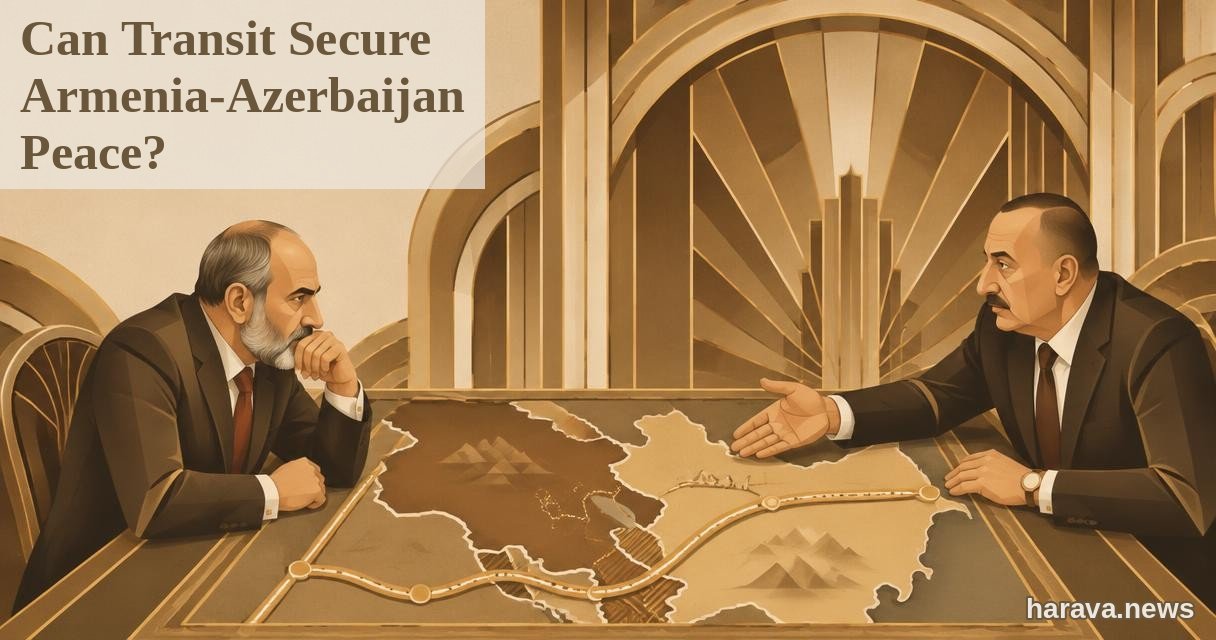
At their November 12 Dublin meeting, Armenian Prime Minister Nikol Pashinyan and Azerbaijani President Ilham Aliyev discussed transport, trade and border work, but gave no public sign their unsigned peace agreement is ready to take effect.
Why transit matters
The countries fought over Nagorno-Karabakh in the 1990s and 2020. Azerbaijan’s 2023 offensive brought the region under Baku’s control; around 100,000 ethnic Armenians fled. Closed borders and little direct trade or transit make cargo a test of cooperation beyond leaders’ statements.
On August 8, 2025, in Washington, Pashinyan and Aliyev signed a joint declaration; their foreign ministers initialed, but did not sign, a peace agreement. It backed transport links under each state’s sovereignty and jurisdiction, including a route through Armenia linking Azerbaijan’s mainland to Nakhchivan, with reciprocal connectivity for Armenia. The text says neither side has territorial claims against the other; signature and ratification are still required for it to take effect.
Route plans and early steps
The Trump Route for International Peace and Prosperity (TRIPP) would cross southern Syunik. It would give Azerbaijan a direct land link to Nakhchivan and promise Armenia broader transport access, with potential trade and investment. The U.S.-Armenia framework says Armenia retains sovereignty over the project area. The planned route could link the Caspian region and Europe; analysts say it could also reduce reliance on Russian transport infrastructure and increase Washington’s influence. It is still being planned, not operated.
Leaders’ offices reported that 105,000 tonnes of cargo had reached Armenia through Azerbaijani territory since November 2025. This used existing transit arrangements, not TRIPP: the first freight train in decades passed through Azerbaijan and Georgia before arriving in Armenia. In April, border commissions exchanged draft rules for mapping and documenting the boundary. In Dublin, leaders discussed delimitation, electricity links and working groups on shared rivers.
Why the treaty remains unsigned
Azerbaijan says Armenia must change constitutional language it views as implying a claim to Nagorno-Karabakh before Baku will sign. Armenia’s draft treaty renounces territorial claims, but a constitutional change requires a referendum and substantial parliamentary support. Pashinyan’s party won a majority in June’s election, short of the two-thirds needed to advance a change alone. Accepting Baku’s demand could be costly for him; signing without it would leave Aliyev’s stated concern unresolved.
On November 7, Armenia, Azerbaijan and the United States launched planning groups on transport and electricity transmission. The Dublin readout says the leaders reviewed rail and highway design. No opening date or treaty-signing timetable was announced. The test is whether trade and infrastructure can benefit people on both sides while the constitutional dispute remains; otherwise, plans and shipments may mark a thaw rather than a lasting settlement.