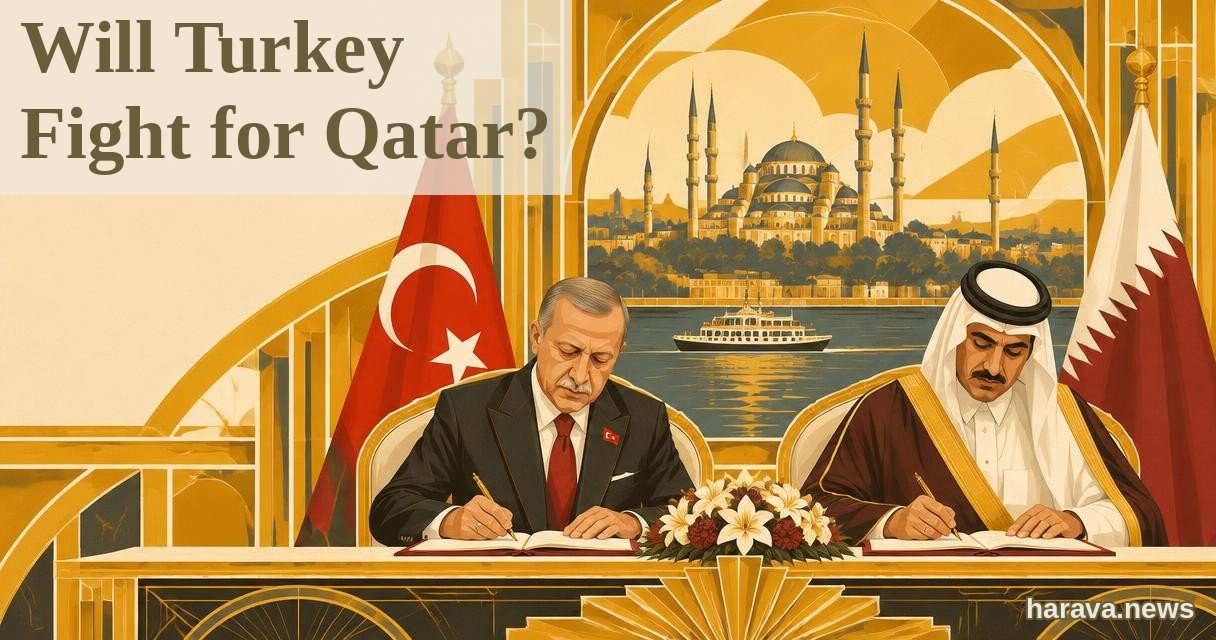
Turkey and Qatar signed a defense pact on November 13, 2026, but its public wording does not say either must automatically send troops if the other is attacked.
What the pact promises
Turkish President Recep Tayyip Erdoğan and Qatar’s Emir, Sheikh Tamim bin Hamad Al Thani, signed the agreement in Istanbul. In a joint statement, the countries pledged a “unified position” against an external armed attack on either or both. They also agreed to consult on security threats and expand military exercises, defense-industry cooperation and personnel training.
The full treaty text and operational details have not been made public. The announcements do not say whether military assistance is required, who would decide its form or how quickly either side would act.
A partnership tested before
The pact builds on a long-standing alliance. Qatar and Turkey established a Supreme Strategic Committee in 2014 and deepened military cooperation during the 2017 Gulf blockade. After Saudi Arabia, the United Arab Emirates, Bahrain and Egypt cut ties with Doha, Turkey quickly backed Qatar, sent supplies and increased its military presence. Turkey’s parliament had already approved troop deployments and military training agreements. Removing the Turkish base became one of the blockading states’ demands. The troops gave Qatar a partner on the ground and Turkey a forward position in the Gulf.
How it fits regional security
The agreement comes as governments reassess security after the 2026 Iran war and its spillover. An analyst speaking to Al Jazeera said Gulf states, especially Qatar, had doubts about the reliability of US security guarantees. That was the analyst’s assessment, not a stated reason in the treaty.
Turkey also signed a separate agreement with Saudi Arabia and Pakistan in August. Its public wording says an armed attack on one partner would be treated as an attack on all three. Turkey’s parliament ratified that agreement on November 6. The Qatar pact does not use the same clear collective-defense wording. Neither announcement identifies a country as the agreement’s target.
What happens next
Qatar gains a formal pledge from a partner that already has troops on its soil. Turkey gains a stronger basis for security cooperation and a larger role in Gulf affairs. But the pact’s value in an attack would depend on its unpublished terms and on what the leaders chose to do. Turkey’s growing presence reassured Doha during the 2017 crisis but alarmed some Gulf neighbors, so closer ties could also deepen regional suspicions.
The announced next steps are consultations, exercises, training exchanges and defense-industry cooperation—not a declared troop or weapons deployment. Al Jazeera quoted a security analyst speculating that Turkish weapons or air defenses might later be deployed to Qatar, but officials have not announced such a plan. The treaty text or implementation arrangements, if made public, and any concrete military commitments will show how far the pact goes.