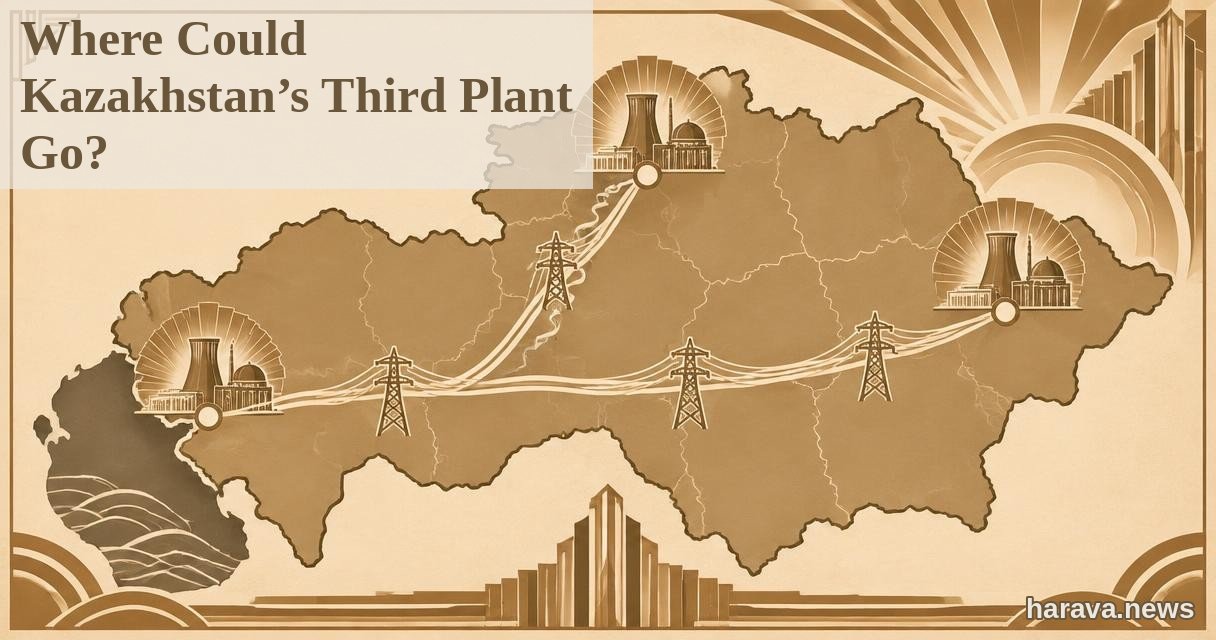
Kazakhstan is assessing sites in three regions for a third nuclear plant as it weighs future electricity needs and dependence on imports.
Three regions under review
At a Nov. 13 conference in Antalya, Atomic Energy Agency chief Almasadam Satkaliyev named three areas under review: Kurchatov in the east, the Caspian coast in the west, and a northern site near the Tobol River. The national grid operator, KEGOC, recommended considering the northern option.
Officials say the choice will depend on regional power demand, geology, water conditions and cooling needs. No site has been selected. Satkaliyev said a medium-capacity plant might also provide heat or, in some cases, desalinate water.
A long-term power plan
In 2024, Kazakhstan used 2.4 billion kilowatt-hours more electricity than it generated. Imports, mainly from Russia, covered the gap, while coal supplied nearly three-quarters of domestic generation. Officials say nuclear power could provide dependable electricity and help diversify away from coal. National strategy calls for at least three operating plants by 2050 and leaves room for a fourth.
Nuclear plants take years to build. The first plant, at Balkhash, is targeted to begin construction in 2027, with its first unit expected in 2034. A third plant would be a long-term answer, not a quick fix.
Different sites, different concerns
Kurchatov has a nuclear-science workforce and a history linked to the nearby Semipalatinsk testing complex, where Soviet nuclear tests left a profound public legacy. In the west, Aktau’s BN-350 reactor operated until 1999, producing electricity and heat and supporting seawater desalination.
The Tobol option reflects KEGOC’s advice and the availability of cooling water. Choosing a site would also determine which communities host the infrastructure and face its local effects.
Uranium is only one part
Kazakhstan’s uranium resources do not make it self-sufficient in nuclear power. Reactors also require technology, financing, fuel fabrication, maintenance and long-term arrangements for used fuel. Russia’s Rosatom is leading the first plant, a two-reactor project, under an agreement that includes a Russian state export loan; public announcements have not disclosed all financing details.
Earlier announcements named China’s CNNC as the intended builder of the second and third plants, but the third plant’s site and technical configuration remain undecided. Kazakhstan says it wants to expand domestic fuel production, though its existing fuel-assembly output is tied to French-designed reactors and currently goes to Chinese partners.
Support and unanswered questions
In 2024, 71.12% of referendum participants supported building a nuclear plant, but the ballot asked about the general policy, not a third plant at a specific site. The vote backed the government’s pursuit of nuclear power; it did not settle how people near a future site will respond.
The next step is further study of the three regions, including their grid needs, geology and water supply. Officials have not announced a timetable for choosing the third site, and earlier talk of a Chinese builder is not a finalized project plan.