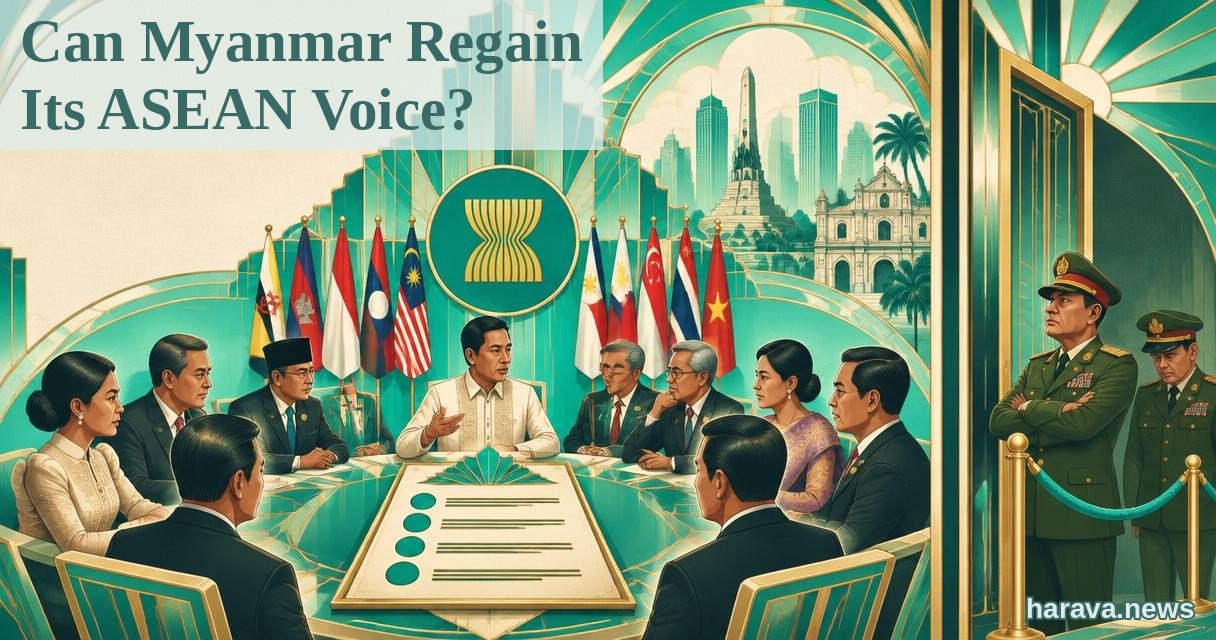
ASEAN kept Myanmar’s military-backed rulers out of top political meetings but offered a possible return if they make sustained progress on a regional peace plan.
The peace plan’s demands
Agreed in April 2021 after the military ousted Myanmar’s elected government, the Five-Point Consensus calls for violence to stop, dialogue among all sides, mediation by an ASEAN special envoy, humanitarian aid and access for the envoy to meet the parties. At their November 15 summit in Manila, leaders voiced deep concern over the conflict and humanitarian situation and urged substantive progress.
Who can take part
Myanmar remains an ASEAN member, and its officials can attend meetings on other areas. But at summits and foreign ministers’ meetings, representation stays non-political. That preserves practical cooperation but denies Myanmar’s political leadership a place at top-level meetings.
Why members differ
Reuters reported before the summit that Laos, Thailand, Vietnam, Cambodia and Malaysia had received Min Aung Hlaing on official visits in 2026. Thailand argued for Myanmar’s foreign minister to attend ASEAN foreign-minister meetings, saying direct contact could carry the bloc’s concerns to decision-makers. Myanmar’s military-backed party won elections in December and January without a viable opposition; Min Aung Hlaing became president. ASEAN noted the election phases had ended but did not endorse the result.
A conditional compromise
“Calibrated engagement” balances members pressing for renewed contact with those wary of treating normal relations as proof the crisis is resolved. ASEAN’s charter includes non-interference and consensus, alongside commitments to democracy and human rights. Members may pursue contact in consultation with the ASEAN chair, while political recognition remains conditional on the shared peace plan.
What is at stake
A return could bring normal relations and regional recognition for Myanmar’s military-backed government. The demands—ending violence, dialogue with all relevant parties and aid access—could require changes analysts say conflict with the regime’s domestic priorities. ASEAN’s leverage may be limited: Myanmar has built ties with other governments, and the peace plan has made little headway. For civilians, immediate concerns include safety, displacement and aid access. ASEAN said an aid mission began a month-long effort targeting more than 11,000 households, but aid cannot replace an end to fighting.
No return date is set
There is no return date or detailed measure of progress. Philippine Foreign Secretary Maria Theresa Lazaro called an end to hostilities an initial test, citing continued bombing and displacement. Thailand’s foreign minister hopes sufficient progress could allow a decision by Thailand’s 2028 ASEAN chairmanship; this is Thailand’s hope, not a bloc deadline. The test is whether the offer brings observable changes or Myanmar’s leaders reject it while ASEAN members continue separate engagement.