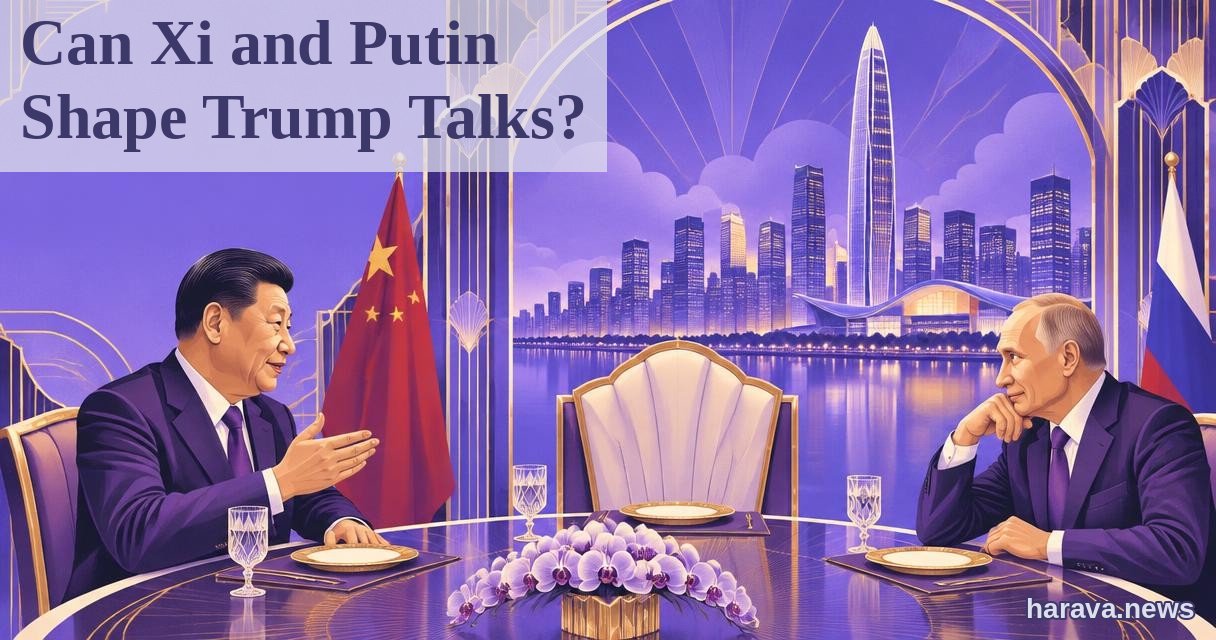
Xi Jinping and Vladimir Putin’s Shenzhen talks come before a planned three-way summit with Donald Trump, giving them a chance to compare priorities while exposing differences.
A partnership with limits
The meetings take place alongside the Asia-Pacific Economic Cooperation summit, which China is hosting for the first time in 12 years. Putin arrived in Shenzhen on Wednesday, November 18; the three-way meeting is scheduled for Thursday, November 19. Russian officials say Xi and Putin will also discuss energy and finance, as well as Ukraine and North Korea in a smaller foreign-policy session. The talks give them a direct channel before the Trump meeting, but do not mean they share a plan for it.
Their partnership has deepened as both governments seek to limit U.S. influence and promote a more multipolar world. In 2022, Xi and Putin declared a friendship with “no limits,” but the countries are not treaty allies and have no mutual-defence pact. Their cooperation is pragmatic, not proof of identical interests. Since Russia’s invasion of Ukraine, trade ties have grown and Russia has become more dependent on China than China is on Russia. That imbalance gives Xi influence, but also gives Beijing reasons to avoid commitments that could harm its wider interests.
What each leader wants
For Putin, the summit offers a chance to appear on equal footing with the leaders of the other two major powers and keep Ukraine on the agenda. Atlantic Council analysts assess that Moscow wants Beijing’s support in dealing with Trump, while Xi is likely to be careful about how openly he backs Russia’s position. Hosting the leaders gives Xi a chance to cast China as a convenor at the centre of global affairs. But Trump and Putin have their own aims, and a clash or unscripted moment could undermine Beijing’s carefully managed display.
An unsettled agenda
Washington says Trump wants to discuss nuclear weapons and the war involving Iran; Beijing has described the meeting as an exchange on world peace and strategic stability. New START, the last U.S.-Russian treaty limiting strategic nuclear arsenals, expired in February. China has resisted joining arms-control talks, arguing that Washington and Moscow should first cut their much larger stockpiles. U.S. officials had indicated Ukraine might not be discussed, but Trump said he would raise it.
The stakes beyond the summit
A nuclear arms-control breakthrough could reduce uncertainty after New START’s expiry, though expectations for a quick agreement are low. Discussion of Ukraine without Kyiv or European governments would raise concerns that those most affected are being sidelined. Iran matters to China because the conflict is disrupting energy supplies and trade. Other Asia-Pacific governments will watch for signs that Washington, Beijing and Moscow intend to settle regional questions among themselves, or can manage rivalry without forcing others to choose sides.
What a result might look like
The likeliest immediate result is a carefully choreographed meeting, not a grand bargain. A more important signal would be a concrete next step: renewed arms-control talks, a durable extension of the U.S.-China trade truce, or an agreed diplomatic process that includes Ukraine and Europe rather than treating them as spectators. Without such follow-through, the summit may mainly show that Xi can bring Trump and Putin to the same table—and that the two partners who met first still have limits on how far they will move together.