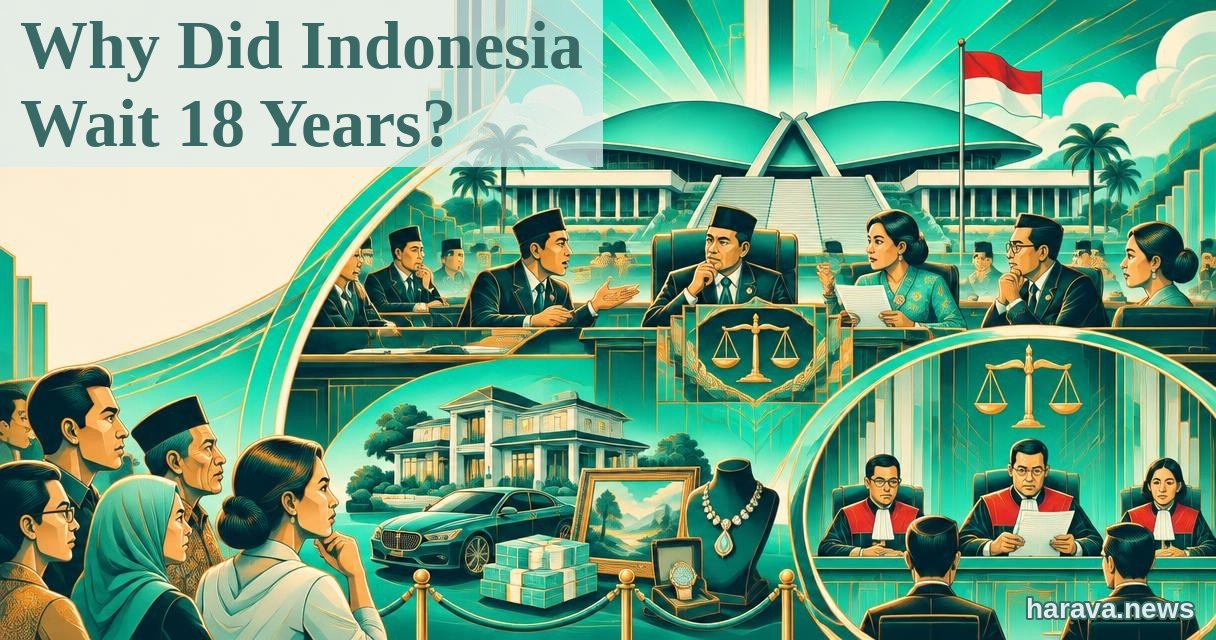
Indonesia’s new asset-forfeiture law ends an 18-year legislative struggle, but its test is whether authorities can recover crime-linked wealth without abusing their power over property.
How the bill reached Parliament
The proposal began with a financial-intelligence study in 2008, and the government sent a bill to Parliament in 2012. It stalled over disagreements about urgency and scope. The Parliament elected for 2024–29 initially left it off its priority list. The delay reflected a difficult balance: criminals may hide illicit wealth, but taking property without a conviction raises concerns about rights and unfair enforcement.
Pressure for action grew as asset recovery remained difficult under a system that often required a criminal conviction first. Demonstrations took place in August 2025 and August 2026. Parliament and the government completed committee-level deliberations on Nov. 18, and lawmakers passed the bill the next day, before a Dec. 15 deadline set by Parliament’s leaders. The House says it held more than 87 hearings.
When can assets be taken?
The law covers seven groups of offenses, including corruption, narcotics crimes, terrorism financing, trafficking, arms smuggling, and large-scale fraud or embezzlement using information technology. But according to Kompas’s account of the final text posted by Parliament, Article 4 allows forfeiture without a conviction specifically in corruption cases. It can apply if a suspect or defendant has died, fled, become permanently ill or disabled, or cannot be identified or located. The assets must be worth at least 1 billion rupiah, about US$55,000. Criminal prosecution can still proceed.
Authorities may trace, freeze or seize suspected assets before a court decides whether to forfeit them. This can prevent wealth from disappearing, but owners may lose access to property before a final decision. The difference between temporary restrictions and permanent forfeiture will matter in practice.
Safeguards and concerns
Proceeds from fraudulent investments or illegal trading could be returned to victims rather than simply going to the state. The law provides for protecting good-faith third parties and creates separate asset-management and supervisory bodies. A five-member supervisory body, to be formed by the president, will monitor officials, handle complaints and promote transparency.
Before the vote, Transparency International Indonesia said the latest draft was not available for adequate public review, leaving questions about evidence, third-party protections and oversight. Kompas reported on a draft posted by Parliament after passage, but access afterward is not the same as a chance to review the final wording before the vote. The Indonesian Legal Aid Foundation warned that freezes and seizures could punish people before a court rules, with risks for civic groups and other organizations.
The test is implementation
The next test is whether the president appoints credible management and oversight bodies, and whether investigators and courts apply the law narrowly and fairly. Supporters hope it will recover stolen public money and compensate victims; critics will watch for wrongful freezes, weak review or selective enforcement. Success will depend not on how much property the state seizes, but on whether it returns crime proceeds without creating new victims.