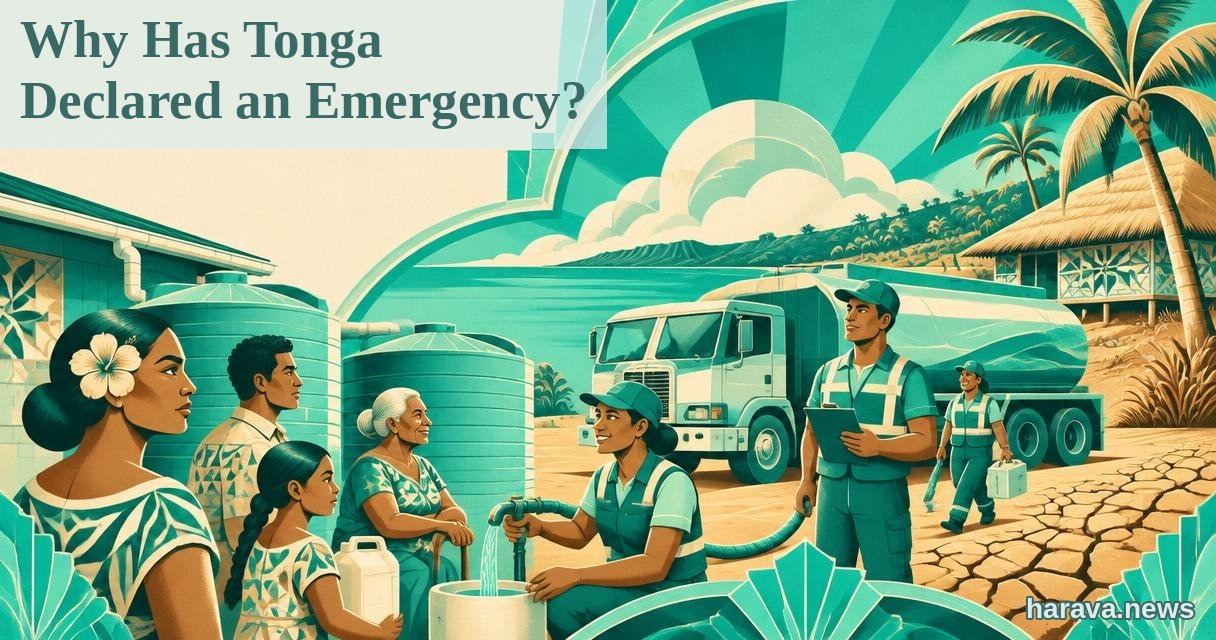
Tonga declared an emergency as El Niño-driven drought threatens water supplies, agriculture, livestock and public health across the island kingdom.
A drought forecast grows more serious
Tonga’s meteorological service warned that El Niño would bring below-average rainfall, especially to islands that rely on rainwater tanks. By October, dry to seriously dry conditions had been observed across the country. In its November outlook, the service said several island groups were under drought declaration, while others were under warning or alert.
El Niño is a natural climate pattern in which unusually warm water in the central and eastern tropical Pacific changes weather patterns. For Tonga, forecasters expect a long period of unusually low rainfall. The Tonga Meteorological Service’s November outlook gave an 80–100% chance of very dry conditions across the country in November and over November–January. It said this could be a very strong El Niño, potentially the strongest since reliable records began in 1950.
Why low rainfall puts communities at risk
Tonga’s communities are spread across many islands, and freshwater sources differ from place to place. Households often collect rainwater from roofs in tanks, while groundwater supplies can be limited and fragile. When rain fails, tanks shrink and pressure grows on wells, public supplies and water for crops and livestock. The government’s drought outlook warns of reduced or empty tanks, depleted groundwater, lower crop yields, higher food costs and greater risks to sanitation and health.
What the emergency allows
Tonga’s acting prime minister declared the emergency on the recommendation of the ministry responsible for disaster management, under the Disaster Risk Management Act 2021. The government said agencies and emergency services needed to use their powers to coordinate assistance and reduce risks to life, property and the environment. Officials are to review the situation before the emergency period ends and decide whether to lift or continue it.
Aid is already reaching the islands
Disaster teams have been sent to outer islands with water-treatment systems and trucks that can carry 8,000 to 10,000 litres per trip. More deployments were planned for the northern islands. The government had also approved 1.8 million pa’anga to support agriculture, including water supplies for farmers and livestock. Schools are ending the year early, showing that drought is already disrupting daily life.
The next test is safe water
The immediate test is whether measures can get safe water to communities faster than supplies run down. This matters especially to people with limited storage, farmers balancing household and agricultural water needs, and people who depend on reliable sanitation and health services. The forecast does not guarantee how much rain each island will receive, but it warns that very dry conditions are likely to persist through January. RNZ reported that drought effects could last until at least June 2027. The government says it will review conditions before deciding whether to end or extend the emergency.