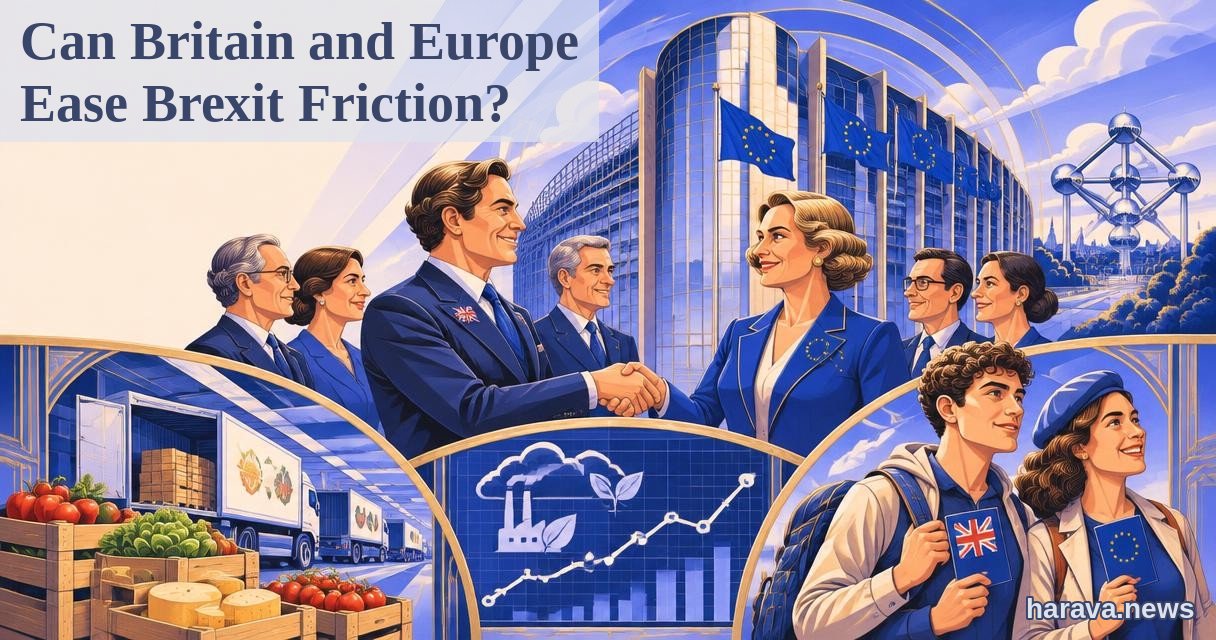
The agreements announced in Brussels on November 20 would ease some Brexit-related costs, but do not restore the UK’s former closeness to the EU.
Why the deals stop short
The Trade and Cooperation Agreement has governed UK-EU relations since 2021. It removed most tariffs but did not keep Britain in the EU single market, leaving food-safety checks, certificates and other barriers. A May 2025 summit opened talks on easing barriers, linking carbon markets and creating a youth scheme; the latest summit completed negotiations.
Britain says UK-EU trade in goods and services totaled £841.7 billion in 2025. Its government wants to support growth and cut costs, but rules out rejoining the single market, customs union or free movement. The EU wants access to remain tied to common rules. The deals offer cooperation in selected areas, not a return to the pre-Brexit relationship.
What changes for trade
The food deal would create shared rules for covered food, animal and plant products. Export health and plant certificates would no longer be needed in many cases, and routine border checks on products such as meat, fish and dairy would end. It is also intended to ease shipments from Great Britain to Northern Ireland under the Windsor Framework. Britain would follow relevant EU rules. The British government estimates the deal could add £5.1 billion a year to the economy; this is a projection, not a guaranteed gain.
Linking the emissions-trading systems would let an allowance from one count toward obligations in the other, creating a larger, more liquid market. The deal is also intended to exempt covered UK and EU goods from each other’s carbon-border charges. The British government says the arrangement could add nearly £3.8 billion to the economy each year by 2040.
Who can move, and when
The youth scheme would let up to 100,000 people from each side, aged 18 to 31, live in the other’s territory for up to three years to work, study, volunteer, au pair or travel. It is temporary, not a return to free movement. The UK says participants will not get access to benefits or be able to bring dependants.
Student fees remain unresolved. The EU wants reciprocal access to domestic “home” rates, while Britain prefers reduced fees. British universities warn that home-fee treatment could cost them money. Negotiators have six months to work on the issue.
The food agreement is due to apply from March 1, 2028, subject to each side’s procedures; the carbon-market link is targeted for January 1, 2028. The joint statement aims for the youth agreement to apply no later than 2028, with opportunities available by January 2030. Broader talks remain open. The package could make trade and travel easier, but it addresses selected Brexit-era frictions rather than Britain’s long-term place in Europe.