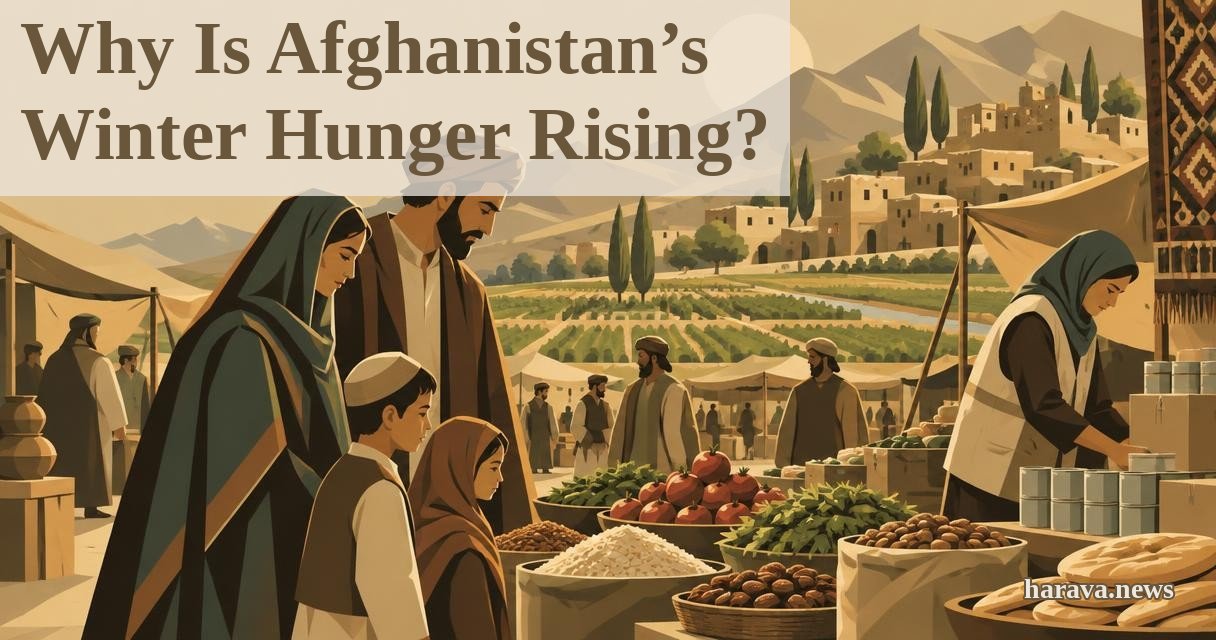
Afghanistan’s winter forecast warns that 19.2 million people could face crisis-level food insecurity or worse from November 2026 through April 2027.
More people face winter hunger
The UN-backed Integrated Food Security Phase Classification (IPC) estimates that 15.9 million people faced crisis-level hunger or worse in September and October 2026, including 3.4 million at emergency levels. For the winter lean season, the projection rises to 19.2 million people—38 percent of the population—with five million in emergency conditions. That is 1.8 million more people than in the same period a year earlier.
These are projections, not a declaration that famine is occurring. In the IPC system, Emergency is Phase 4; Phase 5 is Catastrophe/Famine.
Food is there, but many cannot afford it
Better rainfall and a stronger agricultural season have helped crops and pasture. But the IPC says declining assistance is weakening households’ ability to manage shocks. OCHA spokesperson Olga Cherevko, speaking after visits to southern and northeastern Afghanistan, described seeing food in markets while families went hungry because they lacked money, income or other support. Winter can make it harder to reach vulnerable communities, so aid needs to arrive before families run out of options.
The IPC cites weak purchasing power, unemployment, inflation, rising input costs, trade disruption and cross-border tensions with Pakistan. FAO and the World Food Programme (WFP) also point to high food and transport costs, scarce work, and more than 1.2 million Afghans returning from Iran and Pakistan this year. A better harvest can increase food supplies without restoring jobs, wages or families’ ability to buy a nutritious diet.
Long-term hardship leaves families exposed
Decades of conflict, poverty and climate shocks have weakened households’ ability to recover from setbacks. The IPC says landless families, casual workers, returnees, female-headed households and people dependent on agriculture are especially exposed. Those with few savings or assets may have to sell productive belongings or cut back on food, making recovery harder.
Aid faces funding and access barriers
OCHA’s 2026 humanitarian plan called for US$1.71 billion. By August 26, its funding tracker recorded US$509.3 million, or 29.7 percent. OCHA cautioned that the tracker did not capture all resources, but said the response remained severely constrained. It reported that the shortfall was already linked to closed service points, suspended assistance, reduced coverage and disrupted supply lines. About one-third of nutrition sites had closed or suspended services, largely because of funding cuts.
OCHA’s access assessment lists delays in project approvals, movement and border constraints, funding reductions, administrative and program interference, and restrictions affecting female humanitarian workers and beneficiaries. These obstacles can slow aid, especially for women and girls, and make it harder to reach remote communities before winter travel becomes more difficult.
Children’s health is also at risk
The IPC estimates that 4.04 million children aged six months to five years will need treatment for acute malnutrition in 2027, including nearly 1.1 million severe cases. It says malnutrition is worsened by disease, poor water and sanitation, and reduced access to nutrition services, as well as food insecurity. Restrictions affecting women and girls also matter because maternal health, healthcare access and women’s ability to earn a living affect children’s nutrition.
Aid agencies are urging action before winter deepens: expand food assistance, protect livestock and other productive assets, support farmers ahead of planting windows, and keep nutrition and basic services available. The IPC also recommends preparing for further returns and using early warnings. The forecast is not a fixed outcome; funding, supplies and permissions must reach people at risk in time.