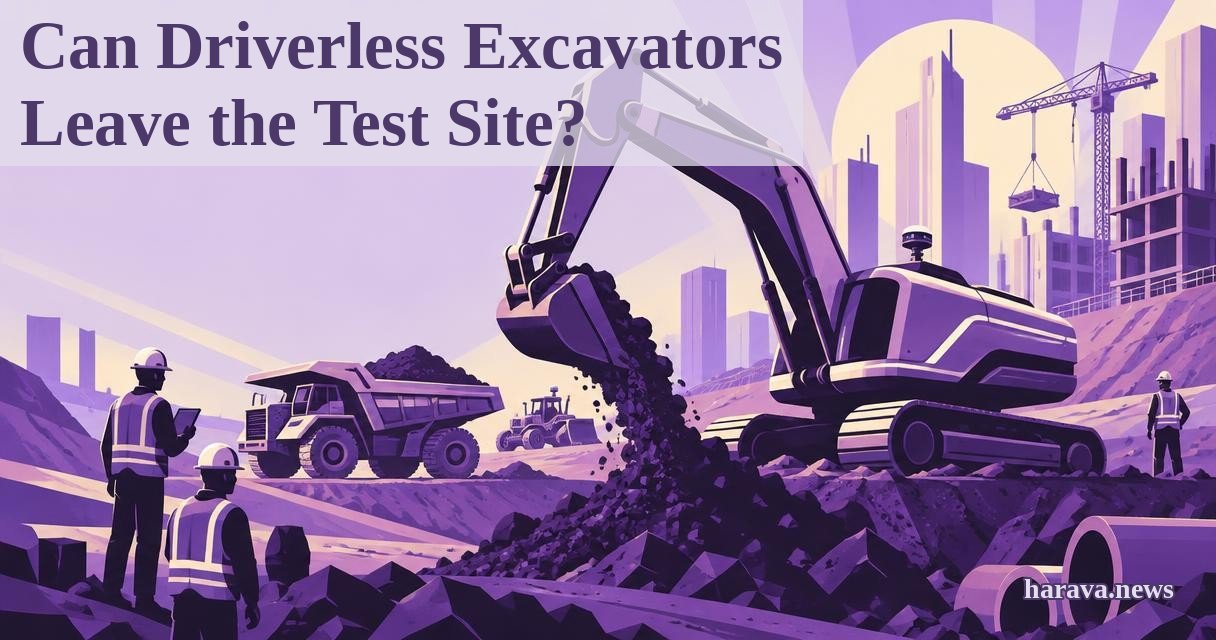
Bedrock Robotics has raised $600 million at a $4.1 billion valuation, as a small number of paid excavator jobs test whether construction autonomy can work reliably at scale.
A major funding round
The Series C, announced October 26, was co-led by CapitalG and Emergence Capital. It brings Bedrock’s total funding to nearly $1 billion. The valuation is more than double the $1.75 billion reported after its February funding round. That rise reflects investor expectations for future growth, not proof that autonomous machines are routine or profitable across the industry.
Founded in 2024 by veterans of Waymo and other technology companies, Bedrock is adapting autonomous vehicle technology for construction sites, where terrain, obstacles and nearby activity change as work proceeds. The company emerged from stealth in July 2025 with $80 million and a plan to add sensors, computing and software to existing heavy equipment instead of building a new fleet. This approach could reduce adoption costs and disruption for contractors who already own excavators.
From tests to paid work
Bedrock and contractor Sundt tested supervised autonomy at a large Arizona excavation site, moving more than 65,000 cubic yards of material, according to Equipment World. In February 2026, CEO Boris Sofman described fully operatorless deployments as the next milestone. By August, excavators using Bedrock’s system were doing paid work at three commercial sites: a Nevada water-treatment project with Sundt, a Texas earthwork site with Champion Site Prep, and a large civil project with Zachry Construction. Bedrock’s CTO described early uses as rough earthmoving, including clearing and cut-and-fill work, rather than every task an excavator might face.
Labor needs and safety questions
Labor shortages help explain investor interest, though the problem extends beyond excavator operators. In its 2026 survey, the Associated General Contractors of America found that 87% of responding firms had openings for hourly craft workers. Among firms with openings, 88% said the jobs were as hard or harder to fill than a year earlier. Nearly three-quarters expected to add employees over the next year. The group said data-center construction is adding competition for workers and that shortages remain the leading cause of project delays.
Contractors need to know whether autonomous equipment can work safely, predictably and economically around crews and other vehicles. Bedrock says its system can stop if a person or object comes too close, and that machines operate only in approved conditions. Early commercial work does not establish performance across different sites, machines and conditions. A late-August report said Bedrock’s CTO expected partner-owned machines to follow by year-end, moving beyond equipment prepared and tested by the company.
The effects on workers are also uncertain. Bedrock and its construction partners say autonomy could handle repetitive earthmoving and free experienced operators for specialized work. A Sundt project manager made a similar case during the Arizona test. But effective automation of routine excavation could reduce the operator-hours needed. Contractors, equipment makers and workers will have a stake in who provides and maintains the machines and software, and how jobs change.
The next test for Bedrock
Bedrock says the new capital will fund more deployments and the field, commercial and operational support needed to serve contractors. The company has announced regional partners and projects in data centers, healthcare and heavy civil construction. Its longer-term goal of fleets coordinating work across a site is not its current product. The next test is whether the excavators can deliver repeatable results beyond a small number of projects, and whether customers find the gains worth the cost and effort.