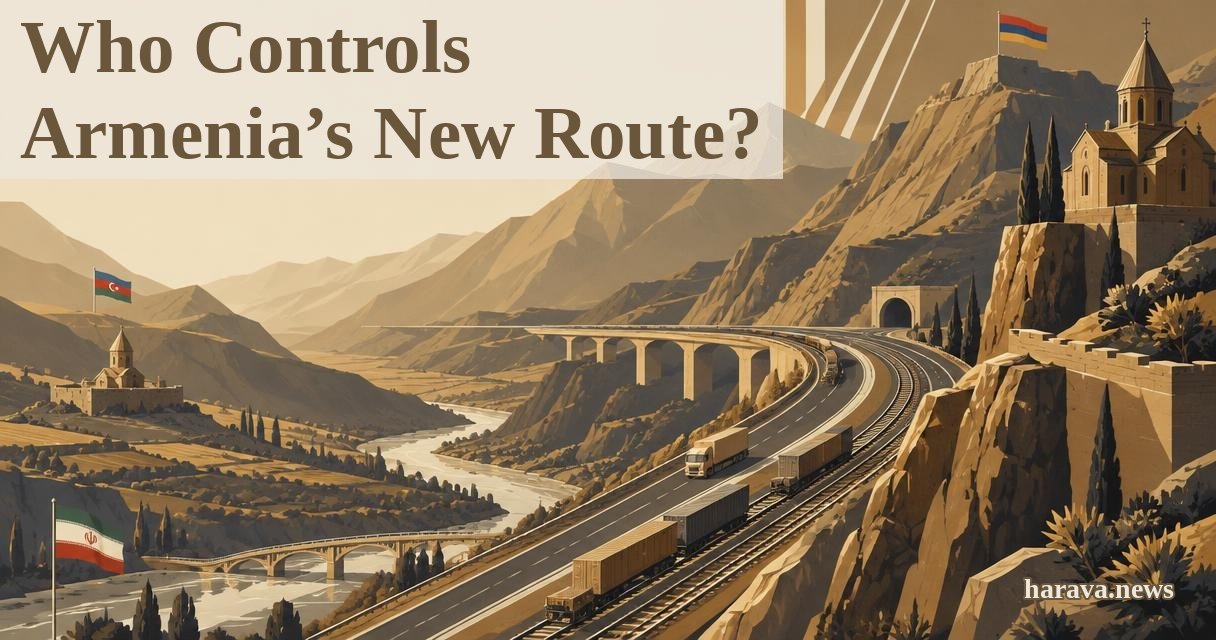
Armenia’s parliament approved the U.S.-backed TRIPP framework, but questions about control, commercial terms and reciprocal access remain open.
What the vote sets out
The 63–32 vote approves a framework for the Trump Route for International Peace and Prosperity, or TRIPP. It proposes a joint development company, with the U.S. side holding 74% and Armenia 26% for an initial 49 years. The partners could extend the arrangement by another 50 years, raising Armenia’s share to 49% and leaving the U.S. side with a narrow majority. The company’s charter and shareholders’ agreement were still being negotiated. Ratification advances the project but does not build or open a corridor.
Why sovereignty matters
A 2020 ceasefire statement called for regional transport links to reopen and for Armenia to guarantee the safety of routes between Azerbaijan and its Nakhchivan exclave. Azerbaijan sought direct transit, while Armenia opposed arrangements that could reduce its control over its territory. After years of conflict, including Azerbaijan’s 2023 takeover of Nagorno-Karabakh and the flight of its Armenian population, sovereignty and security remain sensitive issues. At an August 8, 2025, summit in Washington, Armenia and Azerbaijan initialed, but did not sign, a peace treaty. Their joint declaration supported transport through Armenia while affirming state sovereignty and promising reciprocal benefits for Armenia.
Who keeps authority
The agreement does not transfer Armenian territory or, on paper, Armenia’s authority over policing and border decisions. Armenian officials retain powers over customs clearance, security screening, immigration, law enforcement and taxes. Private operators hired by the development company could collect documents and process payments, while Armenian authorities make decisions. The company would still gain extensive rights to develop and operate infrastructure, as well as long-term land-use and development rights in designated areas. This is a significant commercial concession, even without a transfer of sovereignty.
Promises and concerns
The government says Armenia could gain rail links, access to markets through Azerbaijan, investment and a role as a regional transit hub. Plans could include railways, roads, power lines and fiber-optic cables, with pipelines also possible. The U.S. has stated aims of strengthening trade across the Caspian and gaining access to critical minerals and other supply chains. Analysts also see a possible alternative to infrastructure networks dominated by Russia or China. These gains are not proven, and operating rules and financial arrangements remain unsettled.
Opposition critics say Armenia could help connect Azerbaijan to Nakhchivan without a firm guarantee that Azerbaijan will open routes for Armenian goods in return. They also warn that long-term rights for a U.S.-majority company could weaken Armenia’s leverage. The government says the route is intended to reopen connections for Armenia as well as Azerbaijan. But the Armenia–U.S. framework does not itself bind Azerbaijan to provide reciprocal access.
What happens next
The proposed route would cross Armenia’s southern Syunik region, along the Iranian border, linking mainland Azerbaijan to Nakhchivan. U.S. involvement puts a U.S.-controlled company at the center of a strategically important transit link near Iran and a possible trade route from the Caspian toward Europe. The company would not become a border authority, but the location helps explain the project’s regional significance.
Armenia’s constitutional review and parliamentary ratification are complete, but the two governments still need to finish procedures for the agreement to take effect. The company’s charter and shareholders’ agreement, as well as the route’s design, financing and operating arrangements, remain to be settled. The 2025 peace treaty is still unsigned. On October 28, Foreign Minister Ararat Mirzoyan said Armenia was ready to sign, while noting that Azerbaijan links signing to a change in Armenia’s Constitution. Mirzoyan has also said TRIPP could begin operating before a treaty is signed, leaving open whether the route can build trust or give one side leverage before promised benefits reach the other.