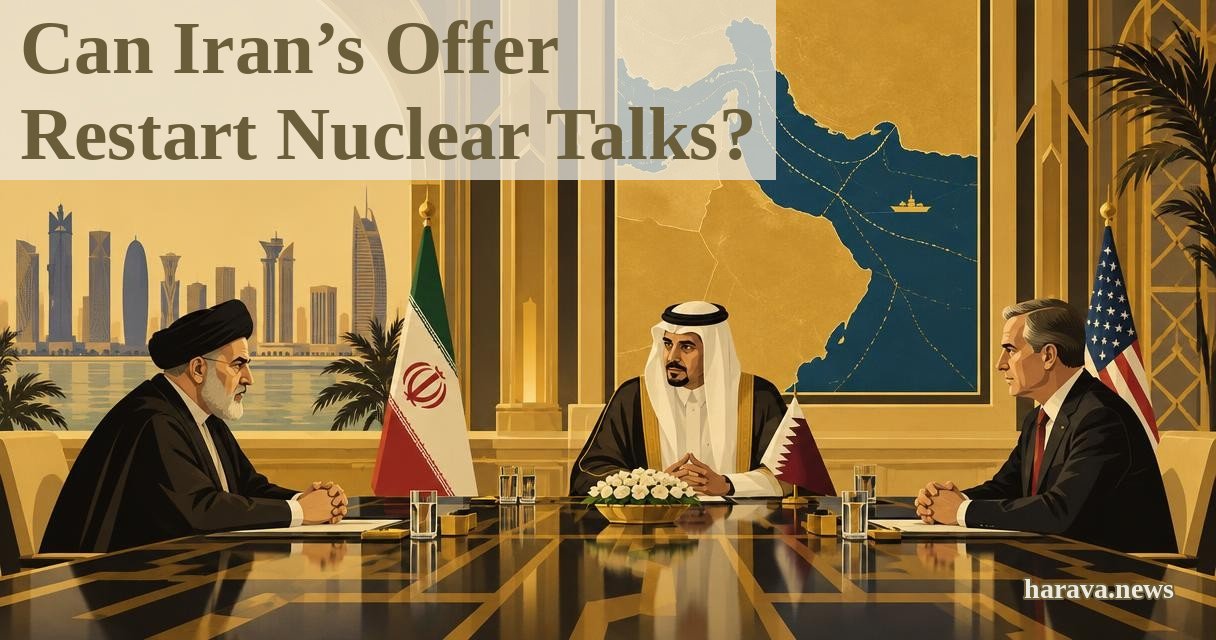
Iran has sent Washington a proposal through Qatar, but Tehran says nuclear talks depend on meeting seven demands.
What Iran has made public
A senior Iranian official said Washington was reviewing the proposal but did not disclose its contents. Iran’s top security official, Mohsen Rezaei, has said Tehran will not negotiate or reopen the Strait of Hormuz until its seven demands are met.
Public accounts mention sanctions relief, the release of frozen Iranian assets and war reparations, but do not provide a complete, authoritative list of the seven demands.
A long breakdown in trust
The 2015 nuclear deal limited Iran’s nuclear activities and expanded international monitoring in exchange for sanctions relief. President Donald Trump withdrew the United States from the deal in 2018 and restored sanctions; Iran began exceeding the deal’s nuclear limits the following year. UN sanctions were reinstated in 2025, adding economic pressure and making diplomacy more difficult.
How Iran links talks to the war
In September, Rezaei called for an end to fighting on all fronts, including Lebanon, the release of frozen funds and an end to the U.S. naval blockade. He also cited U.S. interference and attacks.
In a separate seven-day roadmap, Foreign Minister Abbas Araghchi described lifting the blockade, waiving oil sanctions, releasing frozen assets and reaching a regional ceasefire. Iran would then reopen the strait and begin talks on a final agreement, including the nuclear issue. Reuters later reported that Tehran also sought war reparations. These public positions do not prove the undisclosed proposal includes every item in the same form.
Why Qatar is involved
Qatar can carry messages between governments and host talks as each side tests possible terms. Mediation has intensified in recent weeks, with consultations in Tehran and Doha and proposals moving between the capitals. Officials briefed on the talks said the aim is to prevent a return to full-scale fighting.
The dispute over timing
Washington has said nuclear questions must be addressed from the start. A U.S. official told Al Jazeera that sanctions relief and access to frozen funds could be considered in exchange for nuclear progress. Tehran’s earlier roadmap put economic and military steps first, with nuclear negotiations later.
The International Atomic Energy Agency’s ability to monitor Iran has been sharply curtailed during the conflict. Any eventual agreement would need a credible way to verify what remains at damaged sites and what Iran’s stockpile contains.
What happens next
The Strait of Hormuz gives Iran leverage, but disruption threatens energy shipments and regional commerce. Before the war, the waterway carried about a fifth of the world’s traded oil and gas. Washington wants to prevent Iran from acquiring a nuclear weapon; Tehran seeks sanctions relief, compensation and assurances against further attacks.
The proposal is under review, not an agreement, and no public timetable or response has been announced. More indirect exchanges through Qatar are likely. Progress depends on whether both sides can agree on the order of concessions, restore nuclear inspections and secure shipping. If they cannot, the review may lead nowhere and the risk of renewed escalation will remain.